

July 2024, Volume 47, No. 4
NMC Adds Canada to its National Dairy Quality Awards Program
As part of National Mastitis Council’s (NMC) strategic plan to serve a broader audience geographically, this year’s National Dairy Quality Awards (NDQA) program will include Canada and the United States. Previously, only U.S. dairy operations could be nominated for the NDQA program. This program recognizes dairies that excel in producing high-quality milk. Nominations close Aug. 31.
 Coordinated by NMC, the NDQA program recognizes U.S. and Canadian dairy producers who market milk with a low somatic cell count (SCC) and low standard plate count (SPC). Additionally, judges evaluate dairy producers’ systems of monitoring udder health, milking routine, protocols for detection and treatment of clinical and subclinical cases of mastitis, and strategies for overall herd health and animal welfare.
Dairy industry professionals – including veterinarians, extension agents, dairy processor field staff and consultants – are encouraged to nominate dairy herds that exemplify milk quality excellence. To nominate a dairy producer, go to: https://www.nmconline.org/ndqa and complete the online nomination form. Dairy producers cannot nominate themselves or their peers.
The nomination form asks for: herd size, rolling herd average (pounds of milk, fat and protein), DHI testing, SCC and SPC averages, SCC and SPC high monthly average, bulk tank SCC and SPC testing frequency, clinical mastitis incidence, culling data and cow deaths. Milk quality numbers are based on the 12-month period – June 1, 2023-May 31, 2024.
Judges will name approximately 50 finalists from the NDQA nominations. Finalists, along with their nominators, will complete a more detailed final application. From the finalists, judges will rank dairy operations as Platinum, Gold or Silver. The Platinum winners receive international recognition, complimentary lodging and registration, and a travel stipend to attend the National Mastitis Council 64th Annual Meeting, Jan. 27-30, 2025, at the Le Meridien-Sheraton, Charlotte, N.C., USA.
This year’s NDQA sponsors include Boehringer Ingelheim, Cargill, GEA, Hoard’s Dairyman and National Mastitis Council.
NMC Seeks Scholar Applicants
 If you’re a graduate student interested in controlling mastitis, promoting udder health and improving milk quality, apply for the National Mastitis Council (NMC) Scholars program. This program offers at least four travel scholarships to full-time graduate students. Successful applicants earn an expense-paid trip to attend the NMC 64th Annual Meeting, Jan. 27-30, in Charlotte, N.C., USA.
NMC Scholars are required to submit a paper for the NMC Technology Transfer Session. If accepted, the paper will be published in the 2025 NMC Annual Meeting proceedings.
To apply for the NMC Scholars program, applicants must complete the application form, submit an interest statement that details the applicant’s interest in controlling mastitis and improving milk quality, career goals and research project(s), and provide a letter of recommendation. Applicants may also share additional information, such as awards, honors and scholarships received.
At least two NMC Scholars will be graduate students at a university or college outside of the United States and Canada. Eligible candidates must be an NMC member and enrolled full time at a college or university in a dairy, animal or veterinary science, microbiology or related program at the time of application deadline, with an area of interest that includes mastitis control and quality milk production.
The application deadline is July 31. Applicants will be notified by Aug. 31, regarding the selection committee’s decision. To learn more about the program and to apply, go to: https://www.nmconline.org/nmc-scholars-program.
NMC Regional Meeting Promises to be an Educational and Memorable Event
Make plans now to attend the National Mastitis Council Regional Meeting (NMC) – Aug. 12-14 – in Ghent Belgium. The scientific program features “Challenges for udder health in an evolving dairy industry,” presented by Ynte Schukken, chief executive officer at Royal GD in Deventer, the Netherlands, and a professor of management of farm animal health at Wageningen University and at the Veterinary College at Utrecht University.
Additional presentations and speakers include:
- Tools and tips for diagnosing intramammary infections, Pamela Adkins, University of Missouri

The NMC Regional Meeting Dinner will take place at the Saint Peter’s Abbey.
- Undressing mastitis pathogens by whole genome sequencing to improve udder health, Jeroen De Buck, University of Calgary
- New (or not so new?) mastitis pathogens on the block, Daryna Kurban and Simon Dufour, Université de Montréal
- Controlling the dry-off procedure on your dairies – getting involved, monitoring and training for improvement, Paul Virkler, Quality Milk Production Services
- Inspiring change through your advisory role on farm: How can evidence-based communication support mastitis management? Alison Bard, University of Bristol
- Farm barn to business – keys to success on a dairy farm, Paulina Lingers, Växa
- Sensors to monitor udder health from another perspective, Ben Aernouts, Faculty of Engineering Technology, KU Leuven Campus Geel
- Mastitis (early) detection with sensor technology – what options are there, where is the journey heading? Daniela Marthold, smaXtec
- Balancing tradition and innovation: Approaches to mastitis data handling, Jeffrey Bewley, Holstein Association USA
- How can we use machine learning to improve udder health? Jake Thompson, University of Nottingham
- AMR through the One Health lens – why should the dairy industry care? Kristen Reyher, University of Bristol
- Selective dry cow therapy: Application of recent research, Sam Rowe, University of Sydney
- What have we learned from 20 years of selective treatment of clinical mastitis? Pameal Ruegg, Michigan State University
- Engineering tomorrow’s antimicrobials: Bacteriophages and derived enzymes as innovators for the control of bovine mastitis, Niels Vander Elst, Karolinska Institute in Stockholm
- Unraveling mastitis: Genomics today and tomorrow, Gina Pighetti, Pighetti Farms & Consulting
- Nutrition, metabolism and mastitis, Turner Swartz, South Dakota State University
- Dry cow therapy and its impact on production, antimicrobial resistance and milk microbiota, Sharif Aly, University of California-Davis
- What’s hot in mammary gland immunology? New insights and future directions, Anja Sipka, Cornell University
In addition to the phenomenal scientific program, the event offers:
- Multiple Short Courses
- Two Satellite Symposia
- Two Industry Lunch Fora
- Ten selected oral presentations during the Technology Transfer Session
- Multiple poster presentations
- Great networking opportunities
To register, visit the NMC Regional Meeting registration page.
If you want to learn more about Ghent and Flanders, check out https://visit.gent.be/en and https://www.visitflanders.com/en.
NMC’s Technology Transfer Session Submission Site Opens August 1
National Mastitis Council (NMC) will start accepting submissions for the 2025 Technology Transfer Session (TTS) on Aug. 1. TTS, also referred to as the Poster Session, will be held in conjunction with the NMC Annual Meeting, Jan. 27-30, in Charlotte, N.C., USA. Watch your e-mail inbox for information announcing that the TTS submission website is open. Manuscripts are due Sept. 30.
NMC Research Committee members will evaluate submitted papers during October and inform authors in early November regarding the status (accepted or rejected) of their paper(s). The review committee considers these factors when reviewing TTS submissions:
- Manuscript is based on accepted scientific or educational practices.
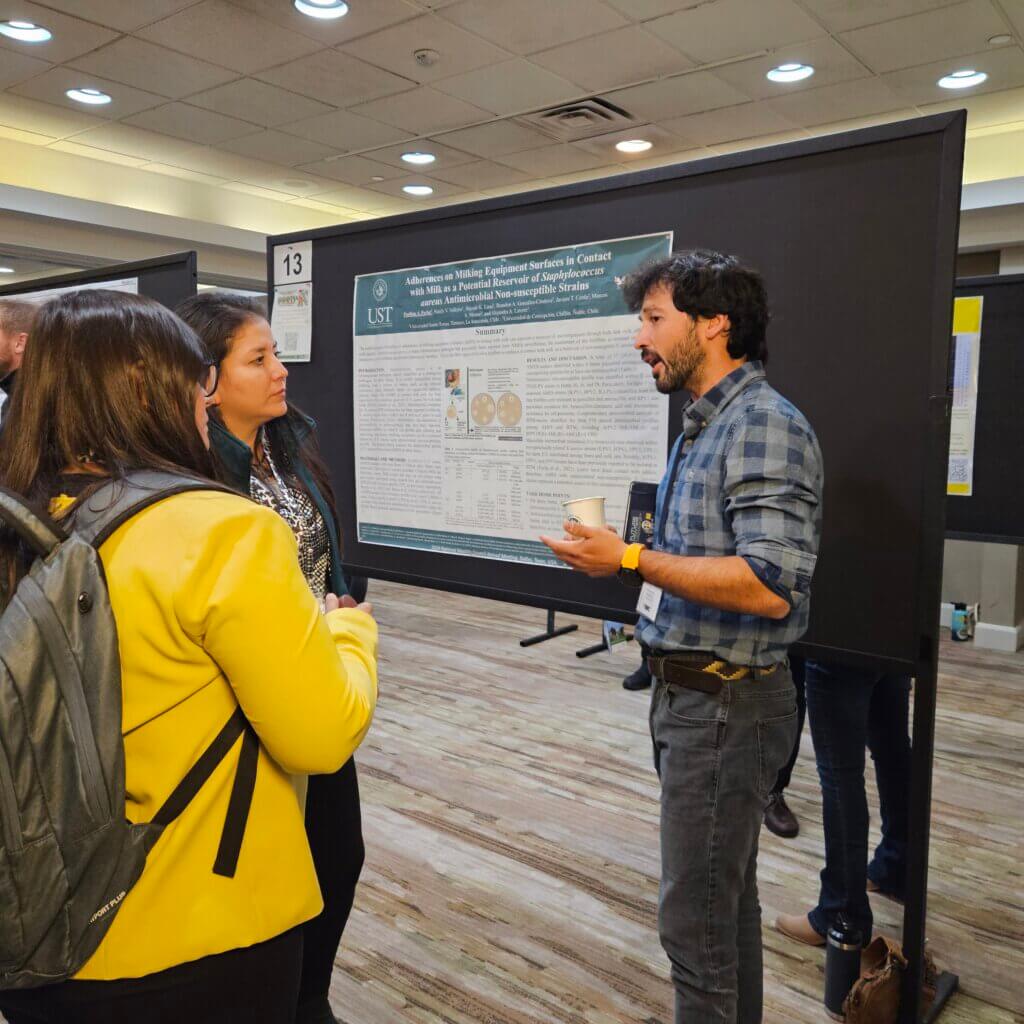
The NMC Technology Transfer Session supplements the annual meeting program by providing additional information through posters and in-person interaction.
- Subject matter aligns with NMC’s mission and goals.
- Work reported is complete.
- Data and statistical validity are presented.
- Reasonable conclusions are drawn based on the data presented.
- NMC’s policy on commercialism is not violated.
- Manuscript is written in English.
- Manuscript adheres to the 2-page limit and follows formatting guidelines (e.g., font, paper and margin size).
NMC accepts four types of papers:
- Research articles
- General interest articles
- Review articles
- Case reports
Each article should contain an introduction, materials and methods, results and discussion, conclusions/recommendations and references. Manuscripts are limited to two pages and must follow the formatting guidelines.
When authors submit papers, they must include an interpretive summary and keywords. However, these are not included as part of the proceedings paper.
Remember, NMC strives to provide quality papers, focused on educational content, which is free of commercial influence or bias. Manuscripts/posters are not to be used as platforms for commercial sales, promotions and/or advertising. Excessive use of brand names, product names, trade names and/or trademarks is not allowed.
TTS supplements the NMC Annual Meeting program by providing additional information through posters and one-on-one interaction. Ten posters will be presented orally during the Research and Development Summaries Session on Jan. 29.
For more information, contact JoDee Sattler (jdsattler@nmconline.org) or Anja Sipka (ass233@cornell.edu).
NMC Members Receive Complimentary Access to All M2-magazine Content
M2-magazine is an academic magazine that focuses on mastitis and milk quality, reaching dairy professionals throughout the world, complemented with a website full of up-to-date information (www.m2-magazine.org). The magazine launched in 2011. Later this year, the M2-team will publish its 40th edition as well as a special edition during the 2024 NMC Regional Meeting in Ghent, Belgium.
M2 highlights scientifically sound news related to mastitis and milk quality from a global perspective, flavored with local facts and figures. If you want to receive the newsletter, visit https://m2-magazine.org/m2-newsletter.
National Mastitis Council (NMC) has been a long-term partner of the magazine and has a one-page story in each printed edition. When you want to log in as an NMC member for the first time, use https://m2-magazine.org/faq-page (“Free access granted to NMC members”). Fill in your e-mail address that is known by NMC and you will receive your M2 password.
If you want an overview of how the magazine looks, click here.
Enjoy!
The M2-team
Balance Health, Profitability and Sustainability via Antimicrobial Stewardship
It probably goes without saying, but fostering antimicrobial stewardship is the right thing to do. During the 2024 National Mastitis Council (NMC) Annual Meeting, Simon Dufour, Université de Montréal, St-Hyacinthe, Québec, Canada, reinforced that dairy producers (and veterinarians) can and should strive to use antibiotics more judiciously to mitigate antimicrobial resistance (AMR).
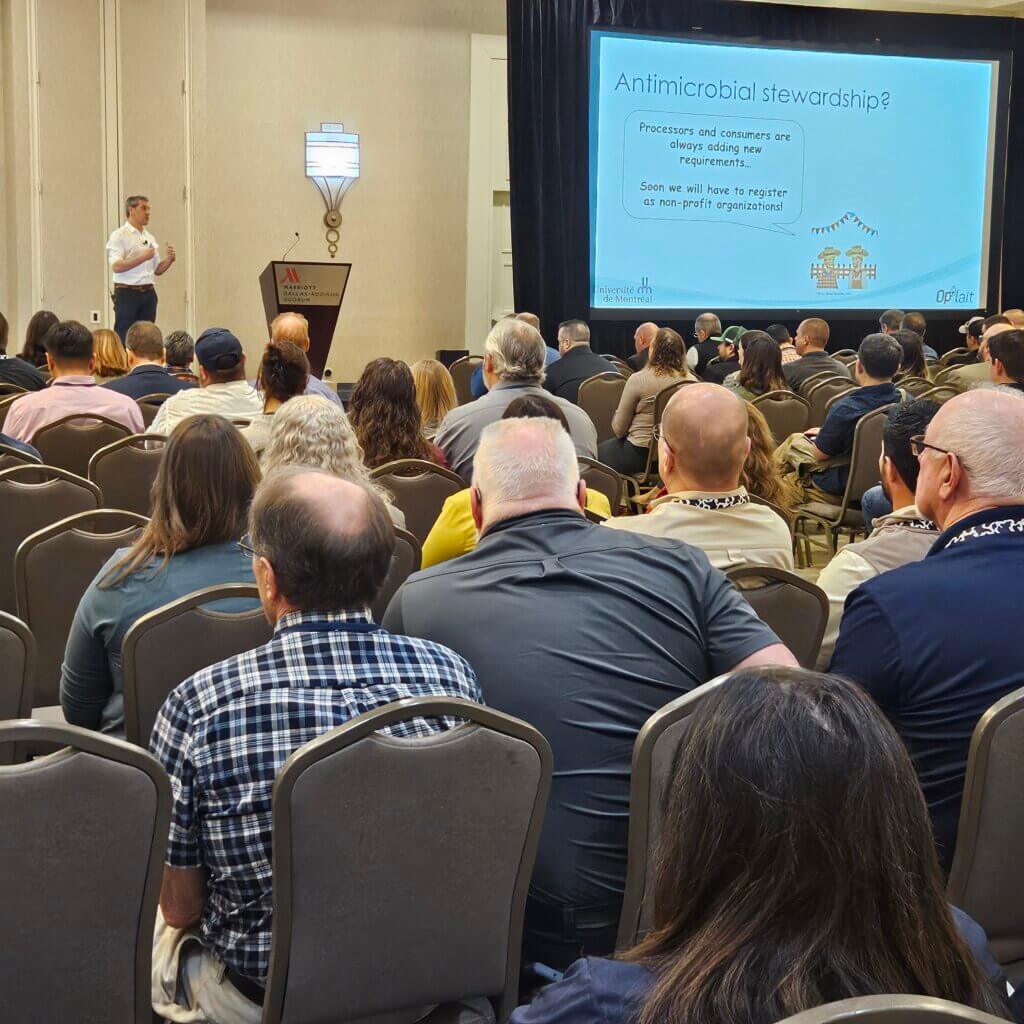
During the 2024 NMC Annual Meeting, Simon Dufour reinforced that dairy producers and veterinarians can and should strive to use antibiotics more judiciously to mitigate antimicrobial resistance.
To explain AMR, Dufour described how AMR develops. Most living organisms are colonized with various bacterial species and other microorganisms, with most of them living in harmony with their host or environment. “In general, these bacterial populations are extremely diverse,” he said. “However, when a host receives an antimicrobial treatment, the bacteria that are susceptible to this antimicrobial will probably be eliminated. If present, the very few bacteria that were resistant to this antimicrobial will then possibly replace this initially diverse population and become the main type of bacteria in that new ‘post-treatment’ population. As a result, the antibiotic will become ineffective for future treatments and the infection may persist – increasing the risk of spreading to other animals and humans.”
Dufour added that, in essence, AMR is like genetic selection – but applied to “bugs.” “When using antibiotics on a farm, we are imposing a selection pressure that will favor resistant bugs,” he explained. “The main problem with bugs is that they need very little time to produce a new generation.” For example, it only takes 20 minutes to create a new generation of Escherichia coli. “In addition, many bacterial species can exchange genetic materials with their neighbors, not just with their descendants, including genes coding for resistance to antimicrobials.”
Simply stated, the more AMRs we use, the more we are selecting resistant bugs. Eventually, AMRs will be ineffective. To curtail AMR, Dufour recommends limiting antimicrobial use. By doing so, selection pressure will be removed and the “bug population” will slowly regain its original diversity.
Optimize antimicrobial use
Dufour described antimicrobial stewardship as optimal use of antimicrobials. How is this achieved? Dufour shared three strategies to foster antimicrobial stewardship. First, design and implement procedures (e.g., vaccination and hygiene) to prevent diseases. Second, determine if an antimicrobial is needed for an animal with a particular condition. And third, if an antimicrobial is needed, choose the appropriate antibiotic and correct dose, route of administration and treatment duration.
To consider management practices that foster antimicrobial stewardship, Dufour encouraged NMC members to start by reviewing a dairy farm’s antimicrobial use. Assess the most common reasons (diseases) why antibiotics are being used. What can be done to prevent these diseases?
Assuming that mastitis is the most common reason for antibiotic use, Dufour suggested evaluating the prevalence of intramammary infections (IMI) at first calving by using milk bacteriology or somatic cell count (SCC). Repeated monthly (or daily for automatic milking systems), SCC measures can also be used to investigate lactational and dry period IMI dynamic. Additionally, compute the clinical mastitis incidence rate. If needed, also compute the clinical mastitis incidence rate for early vs. late lactation and/or age-specific groups of cows.
Based on these assessments, a dairy producer may want to implement preventative measures, such as vaccinating for coliform mastitis, improving milking hygiene and/or improving youngstock, lactating cow and/or dry cow hygiene. “Preventing disease is probably the most efficient method for reducing antimicrobial use,” Dufour stated.
Not all infections need treatment
Next, Dufour recommended developing (reviewing) clinical mastitis treatment and dry-off standard operating procedures. Just because a cow has clinical mastitis, it doesn’t mean you should give her an antibiotic. Dufour shared the results from Kurban et al. (2023), which evaluated milk bacteriological culture results from 43,924 clinical mastitis cases (from Brazil, Canada and United States). Researchers reported that 39.6 percent of culture results were classified as “no growth.”
“The high proportion of clinical mastitis cases with no identifiable microorganism suggest that many of these cases do not require an antibiotic treatment,” said Dufour. “An exception to that would be for severe clinical mastitis cases, where fever, anorexia, depression, etc. are observed.” In these situations, it’s likely that a significant proportion of cows have developed bacteremia (Wenz et al., 2001). “These cows could benefit from a systemic antibiotic.”
Is there a downside to delaying clinical mastitis treatment? “For mild and moderate clinical mastitis cases, neither bacteriological cure, subsequent SCC, milk yield, clinical mastitis recurrence risk, nor culling are impacted when clinical mastitis treatment is delayed by 24 hours to obtain bacteriological results from a rapid diagnostic test (de Jong et al., 2023a),” stated Dufour. He shared a selective clinical mastitis treatment flow chart, which de Jong et al. (2023b) proposed. (See Figure 1.)

Figure 1. Example flow chart for selective treatment of mild or moderate clinical mastitis cases (adapted from de Jong et al., 2023b).
If antibiotic treatment is appropriate, choose an antibiotic that is not primarily used to treat severe human infections. These include quinolones, third- and fourth-generation cephalosporins, and polymyxins. From that list, however (in many countries), only third- and fourth-generation cephalosporins are available as commercial mastitis treatments. Do not use the latter products as the primary clinical mastitis treatment. Instead, keep those for cases where we have data (e.g., an antibiogram), indicating that the pathogen is resistant to the other antibiotics that could be used.
When administering antibiotics, follow the label! Give the right dose via the right administration route for the labelled duration and frequency. Dufour noted that when systemic (intravenous) antibiotics are given, we should determine the animal’s weight and adjust the dose to its weight.
Selective dry cow therapy supports judicious antimicrobial use
For the past decade, significant research has evaluated selective vs. blanket dry cow therapy. In a “nutshell,” practicing selective dry cow therapy (SDCT) without administering an internal teat sealant (ITS) in uninfected quarters usually leads to reduced udder health (i.e., increased dry period new IMI incidence and post-calving IMI prevalence) (Kabera et al., 2021a). Therefore, inserting an ITS in uninfected quarters is an essential component of SDCT. Also, make sure that those administering internal teat sealants follow an aseptic technique. If not done aseptically, bacteria will most likely enter the mammary gland – potentially resulting in an udder infection.
For more details regarding SDCT practices, read Dufour’s complete NMC Annual Meeting proceedings paper (found in the NMC Member Center), refer to past SDCT proceedings papers or review past Udder Topics articles (also found the NMC Member Center) that address SDCT.
Avoid unnecessary expenses
While some are hesitant to “back off” on antimicrobial use, Dufour encourages dairy producers, veterinarians and consultants to adopt a “can do” attitude as they approach antimicrobial stewardship. Overuse of antimicrobials results in unnecessary expenses (e.g., antibiotics, dumped milk), potential for an antibiotic residue in bulk tank milk, and risk of antibiotic-resistant bacteria in milk that may hinder cattle, farm workers and/or the general public.
Dufour cited a couple quotes from Canadian dairy producers who changed farming practices with antimicrobial stewardship in mind. They concurred that proactive measures (e.g., better hygiene) and reducing antibiotic use (by determining which infections to treat, with the appropriate treatment) is doable and yields several benefits, including improved animal health and dairy farm profitability.
“Antibiotic stewardship in dairy cattle requires a multifaceted approach that prioritizes animal health, food safety and industry sustainability,” Dufour concluded. “By adopting responsible practices, including veterinary oversight, recordkeeping, education and exploring alternative management practices, such as selective clinical mastitis treatment and SDCT, dairy farmers contribute to the well-being of their herds, the environment and public health. As consumers increasingly demand transparency and sustainability in food production, antibiotic stewardship stands as a fundamental principle for the dairy industry to thrive in a responsible and ethical manner.”
Get to Know NMC Premier Member Udder Health Systems
Udder Health Systems (UHS) provides milk quality and food testing services for the dairy and food industries. UHS has four comprehensive, state-of-the-art laboratories in Washington, Idaho and Utah. However, UHS staff members work with dairies and veterinarians across the country.
UHS labs are staffed with teams of veterinarians, microbiologists, food scientists and animal scientists dedicated to providing top-quality service to improve producer profitability. In addition to the company’s expansive scope of diagnostic services, UHS provides on-farm personnel training, consultation on outbreaks and control programs, assistance in establishing on-farm culture procedures, parlor audits, teat condition scoring and dairy environmental health assessments.
In addition to milk testing, UHS maintains ISO 17025 accreditation in the Jerome, Idaho lab and can offer analysis of foodborne pathogens for many different raw or finished consumer food products. UHS staff members love talking to people and helping them learn how they can reach their food or milk quality goals.