

March 2024, Volume 47, No. 2
NMC Annual Meeting Features ‘Boots on the Ground’ Take-home Messages
The 63rd National Mastitis Council (NMC) Annual Meeting, held Jan. 29-Feb. 1, in Dallas, Texas, USA, revolved around the theme “Boots on the Ground – Making Milk Quality Happen” and attracted more than 325 members from 29 U.S. states, six Canadian provinces and 21 countries. The attendees represented milk quality, mastitis and udder health researchers, dairy producers and dairy industry partners. Meeting topics ranged from judicious antibiotic use to mastitis diagnosis to mastitis treatment costs to bedding’s impact on milk quality to dry-off procedure monitoring and training to animal husbandry.
“Milk quality starts on the farm,” stated Keith Engel, NMC Annual Meeting program chair and GEA business development manager – hygiene. “This year’s program featured presenters who work to make high-quality milk happen from applied on-farm research, industry experts who work directly with dairy producers and dairy producers who make high-quality milk happen every day. They shared understandable information and milk quality enhancement strategies that can be applied on many dairy farms around the world. Understanding and implementing ‘boots on the ground’ udder health procedures will enhance animal welfare, dairy farm profitability and consumer demand for dairy-based foods.”
During the NMC Annual Business meeting, members elected Justin Graham, BrooksCo Dairy, Quitman, Ga., USA; and Pamela Adkins, University of Missouri, Columbia, Mo., USA; to the NMC board of directors. Executive committee members are Keith Engel, GEA, Hampshire, Ill., USA, president; Justine Britten, Udder Health Systems, Meridian, Idaho, USA, first vice president; Roger Thomson, Michigan State University and MQ-IQ Consulting LLC, Battle Creek, Mich., USA, second vice president; Alfonso Lago, DairyExperts, Inc., Tulare, Calif., USA, secretary-treasurer; and Christina Petersson-Wolfe, Virginia Tech University, Blacksburg, Va., USA, past president. Other board members include Simon Dufour, Université de Montréal, Montreal, Quebec, Canada; Rick Watters, Quality Milk Production Services, Warsaw, N.Y., USA; Christy Dinsmoore, Novi, Mich., USA; Juan “Rodrigo” Pedraza, Zoetis, Willow Park, Texas, USA; Amy Vasquez, Danone North America, Ithaca, N.Y., USA; Stephen Jones, DeLaval, Trinity, Fla., USA; Ian Ohnstad, The Dairy Group, Dorchester, Somerset, England; and Brandon Treichler, Treichler Consulting Services, Canyon, Texas, USA. Linda Tikofsky, Boehringer Ingelheim, Trumansburg, N.Y., USA; and Lowell “Jim” Davenport, Tollgate Holsteins, Ancramdale, N.Y., USA; retired from the board.
NMC awarded scholarships to seven outstanding graduate students to attend the NMC Annual Meeting. This year’s NMC Scholars were Michelle Buckley, Iowa State University, Ames, Iowa, USA; Andrew Sommer, University of Wisconsin, Madison, Wis., USA; Tana Jo Almand, University of California, Davis, Calif., USA; Mary Jane Drake, University of Pennsylvania, Kennett Square, Pa., USA; Alessandro Bellato, University of Torino, Grugliasco, Piedmont, Italy; Desiree Corvera Kløve Lassen, Technical University of Denmark, Kongens Lyngby, Denmark; and Brandon Alfredo Gonzalez-Cordova, University of Concepcion, Chillan, Region de Nuble, Chile. The NMC Scholars program fosters the development of mastitis research and milk quality professionals from around the world.
NMC thanks its annual meeting sponsors who contributed to the program’s success. Platinum sponsors were Acepsis, Axiota, Boehringer Ingelheim, GEA and Merck Animal Health. Gold sponsors included DeLaval, Inc., Ecolab, Inc., Kersia, Land O’Lakes, Mastaplex and Zoetis. Silver sponsors were ABS Global, Inc. and BouMatic. Bronze sponsors included Corner Window Communications, Michigan Milk Producers Association and Upstate Niagara Cooperative. Dairy Partner sponsors included Christian Hill Dairy, Luck-E Holsteins and Tollgate Holsteins.
The 64th NMC Annual Meeting is set for Jan. 27- 30, 2025, in Charlotte, N.C., USA. For additional information, go to: www.nmconline.org.
University of Missouri’s John Middleton Receives NMC Award of Excellence
The National Mastitis Council (NMC) named John Middleton, a University of Missouri professor in the department of veterinary medicine and surgery in the College of Veterinary Medicine and the associate vice president and chief of staff in the office of the university president, as its 2024 Award of Excellence for Contribution to Mastitis Prevention and Control recipient. The 2014 NMC president, Middleton earned his bachelor’s, Doctor of Veterinary Medicine and PhD degrees from Washington State University, is a diplomate of the American College of Veterinary Internal Medicine, and an associate member of the European College of Bovine Health Management.
This award recognizes an NMC member who has provided sustained contributions to mastitis prevention and control through research, extension and/or education, clinical practice or service to dairy producers. Boehringer Ingelheim sponsors the award and presented Middleton with a $2,500 honorarium.

LInda Tikofsky and John Middleton
Middleton has held clinical, teaching, research, administrative and service roles at the University of Missouri for more than two decades. His research has primarily focused on mastitis and milk quality in dairy cattle and dairy goats. Externally, he has held leadership roles in the American College of Veterinary of Internal Medicine, American Veterinary Medical Association and National Mastitis Council. He served as an NMC board member from 2010-2016.
Additionally, Middleton is a long-serving member of the U.S. Department of Agriculture multistate project – Mastitis Resistance to Enhance Dairy Food Safety. Currently, he is a section editor for the health, behavior and well-being section of the Journal of Dairy Science. Middleton has given talks and workshops internationally on mastitis and milk quality.
In support of Middleton’s nomination, Lawrence “Larry” Fox, Washington State University emeritus professor, wrote, “John has made significant contributions to mastitis control and its abatement, and thus the improvement of milk quality.” As a veterinary practitioner, Middleton worked with producers to improve bovine health and milk quality. As a researcher, he directed studies that addressed identifying how mastitis pathogens interact with the dairy ecology to decrease the risk of this disease complex, determining how the cow and calf respond to the exposure of mastitis pathogens, and investigating what management strategies can be developed that will lead to mastitis abatement.
Middleton embarked on his research career at Washington State University, leading investigations into the epidemiology of Staphylococcus aureus mastitis. Not only was he able to explain the cow’s response to this agent in her effort to combat the disease, but he also explored possible methods to eliminate the pathogen during the dry period with success. Much of Middleton’s early work in contagious mastitis abatement at the University of Missouri focused on illuminating the antibody response to vaccination against Staph. aureus. Continuing work on the genus Staphylococci, Middleton directed research examining the roles of non-aureus staphylococci mastitis agents. More recently, Middleton extended his research reach to caprine (goat) staphylococcal mastitis.
Middleton’s former graduate student and now colleague Pamela Adkins praised Middleton for teaching her invaluable lessons on how to develop appropriate questions and methods in science, and his dedication to students and setting them up for success in their careers.
Adkins added, “He not only worked diligently to teach each of his students how to be good scientists, but also how to share our work with fellow researchers, producers and industry personnel. He worked meticulously through draft after draft to make sure we were communicating our work appropriately and clearly. John’s dedication to the success of his students is visible today, as several of us have gone on to continue to work in academia and develop our careers as dairy researchers.”
NDQA Platinum Winners Dairy in Michigan, Minnesota, New York and Wisconsin
Six U.S. dairies garnered accolades from the National Mastitis Council (NMC) for achieving Platinum in the group’s National Dairy Quality Awards (NDQA) program. The Platinum Award winners are Fessenden Dairy, King Ferry, N.Y.; Larson Acres Inc., Evansville, Wis.; Michigan State University Training and Research Center, Lansing, Mich.; Naatz Dairy Farm, Mantorville, Minn.; RKB Dairy, Faribault, Minn.; and Stuart Farms Inc., Lowell, Mich.
The NDQA Platinum herds ranged in size from 142 to 2,791 cows. Annual milk production (per cow) averaged from 26,313 pounds (11,935 kg) to 31,445 pounds (14,263 kg). For average somatic cell count (June 1, 2022-May 31, 2023), these dairies varied from 63,000 to 96,000 cells/ml.
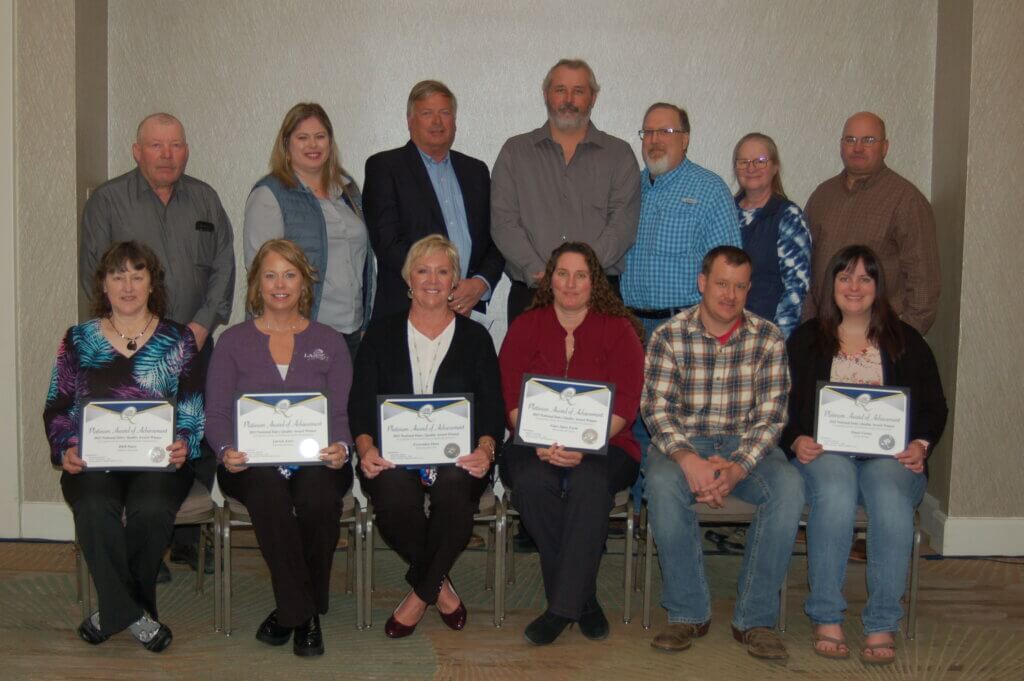
2023 National Mastitis Council Platinum National Dairy Quality Award Winners Front row: Kathy Bauer, RKB Dairy, Sandy Larson, Larson Acres, Ronda Fessenden, Fessenden Dairy, Karen Naatz, Naatz Dairy Cows, and Nathaniel and Amanda Canfield, Stuart Farms Inc. Back row: Randy Bauer, RKB Dairy, Brooke Trustem, Larson Acres, Tim Fessenden, Fessenden Dairy, Willie Naatz, Naatz Dairy Cows, Dan and Sandra Stuart, Stuart Farms Inc., and Jim Good, Michigan State University.
In addition to the six Platinum winners, there were 15 Gold and 18 Silver NDQA winners (listed below). These farms were selected from 66 nominations submitted for the 2023 awards. Farms were nominated by professionals, such as dairy plant field staff, veterinarians, extension specialists and Dairy Herd Improvement supervisors, who serve the dairy industry.
Gold
Garlomar Farms Inc., Falmouth, Mich.
Hendel Farms, Caledonia, Minn.
Horning Farms LLC, Manchester, Mich.
Jagiello Dairy Farm LLC, Lena, Wis.
Lightland Farm, LLC, Stanley, N.Y.
Maly Farms, Bryant, Wis.
F.W. Rahn and Sons, Eden, Wis.
Reuter Farms, Hastings, Minn.
Sunridge Dairy, Nampa, Idaho
Theisen Family Farm LLC, Campbellsport, Wis.
Tollgate Holsteins, Ancramdale, N.Y.
Trailside Holsteins, Fountain, Minn.
TW Dairy Farm LLC, North Collins, N.Y.
Rick Vanvliet & Family Dairy, New Plymouth, Idaho
Willow Bend Farm LLC Bonna Terra, Bloomfield, N.Y.
Silver
Brearley Farms Inc., Portland, Mich.
Clearview Dairy Farm LLC, Martin, Mich.
Dimock Farms LLC, Peru, N.Y.
Dinnerbell Farm, LLC, Eden, Wis.
Dorner Farms, Luxemburg, Wis.
Evergreen Dairy Farm LLC, St. Johns, Mich.
S&L Goebel, Fond du Lac, Wis.
Hirsch Dairy Farm LLC, Alexander, N.Y.
Holger LRS Farm, Hersey, Mich.
Kehljam, Inc., Strykersville, N.Y.
Ketchum Farms, Utica, Minn.
Michels Farm, Lomira, Wis.
Nathan Neeper, Wapakoneta, Ohio
Ping Dairy, Eubank, Ky.
Schroeder Bros. LLC, Caledonia, Minn.
Schultz Dairy LLC, Sandusky, Mich.
Williamson Farms LLC, Seymour, Wis.
Matthew Zimmerman, Ashland, Ohio
NDQA judges considered many criteria when reviewing finalists’ applications. In addition to milk quality indicators, such as somatic cell count (SCC) and standard plate count (SPC), judges looked at specific details about each operation, including milking routine, cow comfort, udder health monitoring programs, prevention and treatment programs, strategies for overall herd health and welfare, and adherence to drug use and record keeping regulations.
This year’s NDQA sponsors included Boehringer Ingelheim, GEA, Conewango, Cargill, Hoard’s Dairyman and NMC. This summer, nominee information for the 2024 NDQA program will be available on the NMC website (www.nmconline.org) and in Hoard’s Dairyman magazine.
To broaden NMC’s reach and exposure, the NMC board of directors approved opening its NDQA program to Canada. For 2024, NMC will accept U.S. and Canadian dairy operation nominations – from July 1-August 31. For more information about the NDQA program, go to: https://www.nmconline.org/ndqa.
Pamela Adkins, Justin Graham Join NMC Board of Directors
During the 2024 National Mastitis Council Annual Meeting, two new individuals – Pamela Adkins and Justin Graham – joined the NMC board of directors. Learn more about these NMC members.
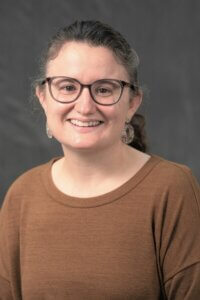
Pamela Adkins
Pamela Adkins is originally from Nebraska. She developed and explored her passion for veterinary medicine, livestock health, dairy and microbiology while attending college in Nebraska, Ohio and Missouri. She recognized her enthusiasm for research while in veterinary school at Ohio State where she was involved with research in molecular epidemiology of bacterial species of public health concern. Adkins was then able to combine her research and dairy interests during her PhD at the University of Missouri (MU) with John Middleton as her advisor. Her graduate work focused on understanding the molecular epidemiology of non-aureus staphylococcal species in dairy cattle. Since finishing her PhD in 2017, Adkins has continued on as an MU faculty member. Adkins is a clinician scientist, working in the food animal clinic and leading her udder health research team. Most of her current research work focuses on heifer mastitis and continuing to explore the significance of non-aureus staphylococcal species. She is also passionate about providing support for rural veterinarians serving livestock species. Adkins has worked with teams at MU to produce continuing education opportunities with a focus on topics of importance to rural veterinarians, veterinary technicians and veterinary students with interest in working in rural areas.
Adkins first attended the National Mastitis Council Annual Meeting in 2013 as an NMC Scholar. Since that first meeting, she has continued to be active in the organization, having a great appreciation for the objective of the organization to support milk quality though educational opportunities and bringing together producers, veterinarians, researchers, industry, extension, regulatory agents and students. She has served as a member of the Research Committee, an annual meeting presenter and short course instructor. Adkins looks forward to being a member of the board or directors and continuing to support this great organization.
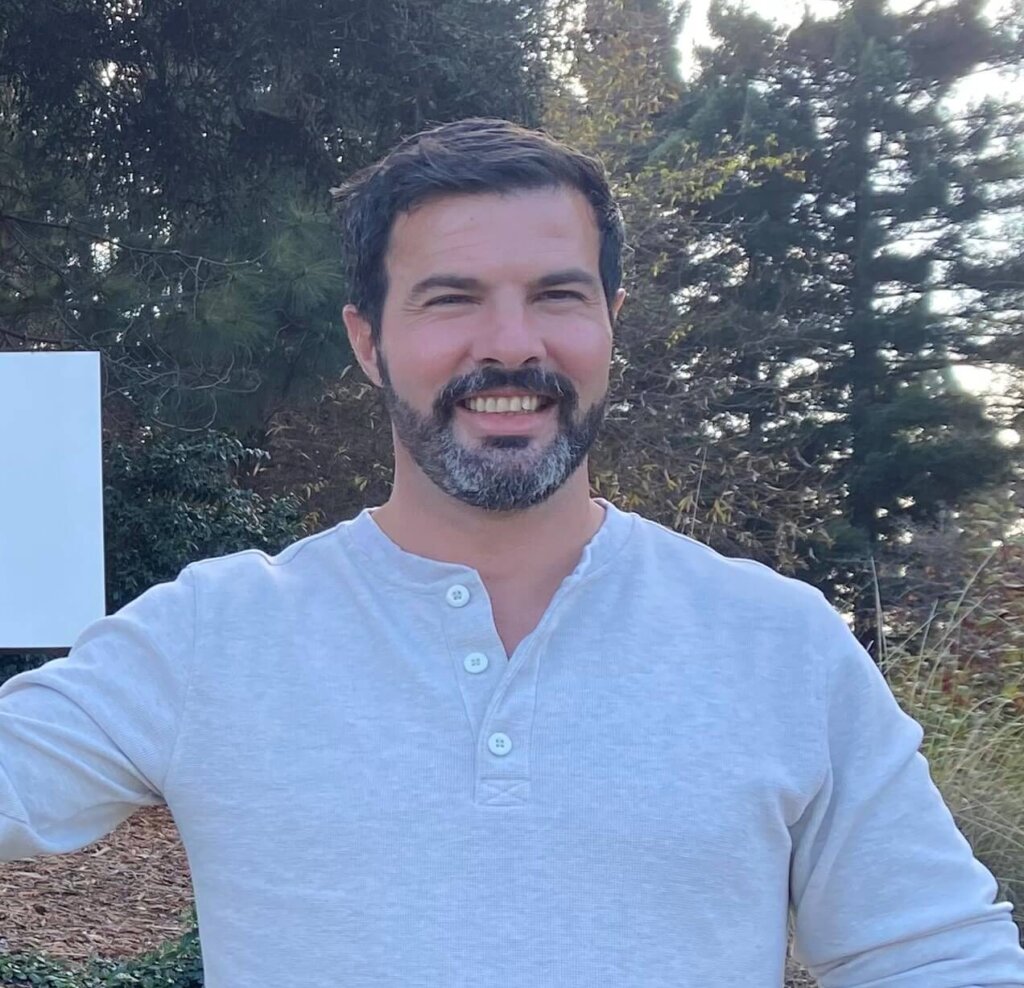
Justin Graham
Justin Graham is a 2013 graduate of the University of Georgia College of Veterinary Medicine. His first two years of veterinary practice were spent in the cold climates of western Wisconsin, working in a practice providing services to dairies – both large and small. He then relocated to Northern Colorado, working with dairies in that part of the country before coming back to Georgia in his current role as herd veterinarian for BrooksCo Dairy.
Graham oversees all aspects of animal health across the organization’s different sites, with a particular focus on milk quality. In keeping with the dairy’s stated mission of producing the highest quality milk at the lowest cost, he works closely with teams involved in bedding management, the milking parlor and milking equipment maintenance. Graham joined NMC in 2013 and is looking forward to serving on the board of an organization that has been so consequential in pushing the dairy industry toward higher standards of milk quality.
NMC Offers Updated ‘Microbiological Procedures for the Diagnosis of Bovine Udder Infection and Determination of Milk Quality’ Book
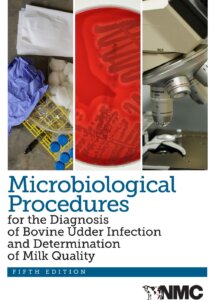 In late 2023, the National Mastitis Council (NMC) published the fifth edition of the “Microbiological Procedures for the Diagnosis of Bovine Udder Infection.” The publication was last updated in 2004. This book is intended as a concise reference to procedures for microbiological diagnosis of bovine mastitis.
Procedures for bulk tank milk culturing and bacteriological quality of raw milk are included. Methods recommended are intended for use in mastitis control programs or in mastitis research, and represent current procedures available for the detection of the more common mastitis pathogens. Various microbiological tests, media and classification schemes are not described in detail. If you would like additional information, consult the “Laboratory Handbook on Bovine Mastitis,” published by NMC. To promote uniformity among laboratories, NMC hopes that the methods described in “Microbiological Procedures for the Diagnosis of Bovine Udder Infection” will be generally used.
To order “Microbiological Procedures for the Diagnosis of Bovine Udder Infection,” “Laboratory Handbook on Bovine Mastitis” and/or other NMC publications, go to: https://www.nmconline.org/publications. If you have questions, contact Sandra O’Rourke (sandra@nmconline.org).
NMC Publishes New Fact Sheet
“Hot off the press” is National Mastitis Council’s new “Liner Fact Sheet.” This Fact Sheet provides an overview, with moderate level of detail, into aspects of liner assessment and the interaction between the liner and teat during machine milking. Key topics include liner dimensions, liner compression and milking vacuum. Go to the NMC Fact Sheets webpage to read this new fact sheet.
View TTS Presentations from the 2024 NMC Annual Meeting
The National Mastitis Council is fortunate to have several members who routinely conduct research related to mastitis prevention, treatment and control, udder health, milk quality and animal well-being. Through the Technology Transfer Session (TTS), members presented 36 posters during this year’s NMC Annual Meeting.
Young scientists presented most of the posters. To enhance researchers’ presentation skills, NMC encourages TTS presenters to present their research via a recorded video. Plus, 10 members presented their research in person during the NMC Annual Meeting’s Research and Development Summaries Session.
Click here to view the TTS list and click the link embedded in the poster titles to view the presenters’ recordings. Most presenters included their contact information in their presentation. NMC encourages you to reach out to these researchers if you have questions, comments or would like to explore future collaboration.
NMC Scholars Share Annual Meeting Reflections
Editor’s note: Each year, we ask the National Mastitis Council (NMC) Scholars to share their perceptions, observations and personal experiences regarding their attendance at the NMC Annual Meeting. Here’s what this year’s Scholars had to share about their experiences.
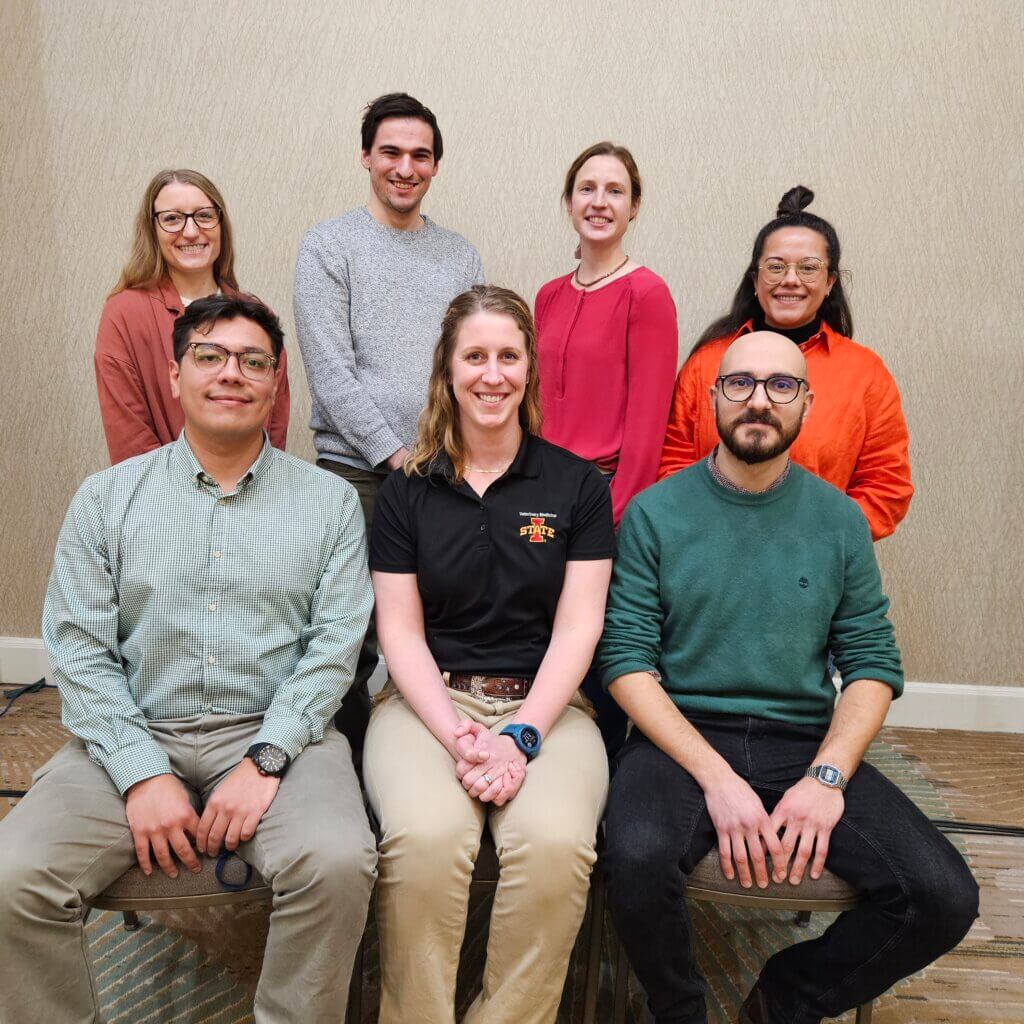
NMC Scholars Front row: Brandon Gonzalez-Cordova, University of Concepcion, Michelle Buckley, Iowa State University, and Alessandro Bellato, University of Torino. Back row: Tana Jo Almand, University of California, Davis, Andrew Sommer, University of Wisconsin, Mary Jane Drake, University of Pennsylvania, and Desiree Lassen.
Tana Jo Almand
University of California, Davis
I was elated and surprised when I was informed that I had been selected as a 2024 NMC Scholar. Being a Scholar meant that I could receive the funding necessary to attend the conference and present a research poster. I am a third year PhD student studying new approaches to selective dry-off criteria. My research involves surveying dairy producers about milk quality and selective dry cow therapy. We also aim to use machine learning algorithms and genomic data to enhance selective dry-off standards. Lastly, we plan to implement on-farm selective dry cow therapy using machine learning algorithms, genomic data and a supportive supplement. We feel this new methodology has the potential to further augment the impact of selective dry cow therapy.
While at the NMC Annual Meeting, I attended the Short Course, “Should We Treat Her or Should We Eat Her? How to Make Economically Sound Mastitis Treatment Decisions.” I found it to be very informative and applicable to my research. All four instructors did a great job presenting and holding a conversation with the audience. I appreciated this course, as the smaller class size allowed for more interaction between speakers and attendees. I also thoroughly enjoyed the General Sessions that were taught by experts from all around the world.
Presenting a research poster during the Technology Transfer Session proved to be extremely valuable and worthwhile. I was able to network with experts from many fields, receive insightful feedback and develop new professional relationships. Being an NMC Scholar made this possible for me and for that I am greatly appreciative! I look forward to attending more National Mastitis Council Annual Meetings in the future.
Alessandro Bellato
University of Torino
As a PhD student in the department of veterinary sciences at the University of Torino, Italy, my focus is the risk factors affecting cow udder health in mountain herds. I spent three years studying the few dairy herds surviving in remote corners of the Apennine Mountains in Italy. I developed the idea that not only the well-known risk factors linked to the cow, the pathogen, hygiene and treatment plans contribute to mastitis, but also other neglected socio-economic aspects. I did not consider it a topic that would raise someone’s interest in a prestigious scientific society like NMC. However, my “adoptive” supervisor, Theo Lam, persuaded me that the broad-minded NMC community would welcome me, so I applied for the NMC Scholar program. When I received the news, I was surprised and honored to have been selected for this remarkable opportunity. And indeed, it was a great one, from both a professional and personal point of view.
Given my interest in contagious pathogens, I attended the Short Course, “Staph. aureus is back?!?” In this course, I learned more about this pathogen from the excellent presentation by Justine and Allan Britten of Udder Health Systems. I appreciate how they analyzed the latest epidemiology of Staphylococcus aureus, providing thought-provoking suggestions on effective diagnostic protocols, prevention measures and control efforts. Finally, the course concluded with a case study analysis discussion animated by compelling questions posed by the audience.
The General Sessions offered many great insights into current issues in the dairy sector. Many aspects were covered – from hygiene to diagnostics and therapy to welfare. The scientific level of the presentations was remarkable. Yet, what I appreciated most was the hybrid approach to the topic of mastitis, which was addressed from both an academic, research and technological advancement point of view, and a non-academic one. Indeed, working in academia, most of the conferences I’ve attended were about sharing research, so I was excited to learn about the broader concerns of the dairy sector, as they provided some exciting perspectives for my future studies.
I presented a poster related to a research project I participated in at GD Animal Health, the Netherlands, about the strains of Streptococcus agalactiae that circulate in Dutch herds. To me, that was a valuable moment of scientific interaction with colleagues all over the world. I received beneficial and inspiring suggestions and perspectives concerning my study. Also, during these discussions, the possibility of scientific collaborations emerged and I was enthusiastic about future research opportunities.
This was my first NMC Annual Meeting and although colleagues had prepared me with stories about the great time they had, I was really impressed. I made new friends I look forward to seeing again at the next meeting or collaborating with on future research projects. I genuinely enjoyed this opportunity. I want to thank the NMC community that welcomed me, as Theo said. I thank the meeting organizers and especially JoDee Sattler and Kyle Wieskus for being so kind and available.
Michelle Buckley
Iowa State University
The National Mastitis Council Annual Meeting was my favorite conference I attended in the last year. As a veterinarian, I have experienced many conferences of varying sizes, but they are almost exclusively focused on veterinary medicine. While interacting with other members of my profession has certainly helped expand my understanding of dairy production medicine, I have found that interacting with those who are involved with other aspects of the dairy industry can open our eyes to new perspectives, challenges and interventions that will make me a better steward of animal health and milk quality.
During the Antimicrobial Stewardship Discussion Group, it was fascinating to listen to experts in microbiology, teat health and pharmacology, as well as producers and industry partners discuss policies and challenges that the dairy industry faces with regard to antimicrobial use. These challenges affect each of us differently and developing a realistic and effective plan for monitoring antimicrobial use and resistance development requires many perspectives. I especially enjoyed the international perspectives and learning more about how U.S. policy is influenced by the European Union, World Health Organization and other trade groups.
Regional and production differences were highlighted in the “Real World Milk Quality: A Case-based Approach” Short Course I attended. The three speakers highlighted challenges to milk quality that they encountered on farms in New York, Ohio and California. While the cases were all different, I was struck by the reoccurring themes that they all encompassed: challenges managing bedding, milking sanitation issues and communication breakdown between farm management and employees. This emphasized the universality of many of the core obstacles that we face when trying to manage animal health and milk quality.
Finally, it was an honor to present my research to the NMC community during the Technology Transfer Session. I was grateful for the opportunity to share my data, especially because NMC tends to be bovine focused and my research concentrates on improving milk quality in goats. The interest and enthusiasm from other meeting attendees about milk quality in dairy goats was remarkable.
I would like to extend a sincere thank you to the NMC Program Committee as well as the support staff (JoDee Sattler, Kyle Wieskus, Kristy Mach and Susan Schatz) for putting together such an educational and well-run program, and allowing me the opportunity to attend this year’s meeting. I look forward to next year’s meeting in Charlotte!
Brandon Gonzalez-Cordova
University of Concepcion
First and foremost, I would like to express my gratitude to NMC for giving me the opportunity to travel from the southern part of the world to the 2024 NMC Annual Meeting in Dallas and present my research. As a master’s candidate and a young Chilean researcher, participating in this important event was an invaluable experience in my life and a significant advancement in my professional career.
From the moment I arrived at the hotel, I could sense the vibrant atmosphere of NMC. I knew that this place would gather the most influential people in udder health and milk quality worldwide. Observing how professionals in the field gradually arrived and congregated in this place was an incredible sensation. I was very excited about what I would experience in the following days of the meeting. For this reason, I prepared my itinerary to attend and participate in as many activities as possible, knowing that every minute would be valuable.
I started my activities with the Short Course, “Managing Milk Quality in Robotic Milking Systems,” where I gained a deep understanding of the importance and significant challenge of transitioning from conventional farms to robotic farms. This perspective was provided by producers, veterinarians, researchers and professionals working in private companies from different parts of the world. Furthermore, I participated in the Research Committee and Antimicrobial Stewardship Open Discussion Group, where I had the opportunity to be part of important debates and interventions led by knowledgeable people present at these gatherings. It was an immensely enriching experience for me, where I could listen to the most relevant topics in these areas of development and completely expand my academic objectives and research horizons.
All the knowledge acquired during the sessions and committee meetings was doubly satisfying. As a Spanish speaker, every idea I managed to absorb from the discussions and conversations among specialists came with the additional benefit of language learning. Being part of this experience, participating and sharing spaces with professionals I admire was deeply gratifying.
In addition, one remarkable aspect of the NMC Annual Meeting is the atmosphere that forms in the hallways and in every social space. In these places, I had the opportunity to meet and engage in discussions with colleagues from different parts of the world, which created enriching bonds. Furthermore, sharing breakfasts, lunches and dinners were not only part of the routine but also turned into meaningful exchanges of experiences and different perspectives related to our professional fields. Undoubtedly, the networking that takes place in these settings is invaluable.
Finally, after the meeting concluded, I had a couple of days to explore the city and get to know a bit about American culture. Every moment of this trip was sensational. I am very happy and grateful to have been selected as an NMC Scholar. I look forward to attending next year in Charlotte and continuing to have new experiences as an NMC member.
MJ Drake
University of Pennsylvania
I was ecstatic to find out I was selected as an NMC Scholar and attend the 2024 NMC Annual Meeting in Dallas, Texas, USA, this past January. I am currently in my second year of clinical residency with PennVet’s Food Animal Field Service – working toward ABVP (American Board of Veterinary Practitioners) Food Animal Board Certification. Prior to becoming a veterinarian, I completed a PhD in microbiology at the University of Pennsylvania. During my residency, I developed a passion for milk quality and mastitis prevention. Milk quality combines my long-standing interests in microbiology, disease prevention and data analytics. I hope to use the skills and knowledge gained through NMC and my residency to help producers make evidence-based and data-driven decisions for the health of their animals and dairy operation.
As an NMC Scholar, I had the opportunity to present my research on the effect of zinc supplementation on the microbiome and resistome of dairy cattle and their calves through an oral presentation in the Research and Development Summaries Session and a poster in the Technology Transfer Session. It was the first time presenting this work to an audience and I appreciated the productive conversations I had with other researchers and interested individuals afterward. Moreover, I enjoyed attending these sessions and learned about the latest in milk quality research. At the start of the conference, I was able to attend a pre-conference seminar hosted by Pamela Ruegg and her colleagues on making economically sound mastitis treatment decisions and hear her expand on this topic further during a General Session. I sat in on the Antimicrobial Stewardship Open Discussion Group where there was valuable discussion on reducing antimicrobial use in dairy cattle, which is especially relevant as a prescriber myself. There were many great General Session presentations that I was able to take away information I can put directly into practice. These include talks on monitoring and minimizing delayed milk ejection, dry-off training and ways to improve staff training and employee engagement.
In addition to the seminars, I enjoyed meeting other professionals during meals and breaks. The NMC Annual Meeting is a terrific event because it facilitates connections among different stakeholders in milk quality, including researchers, producers, industry professionals and veterinarians. One of my favorite sessions was the panel with the award-winning dairy producers. I learned what they do on their farms that drives success.
I want to offer my sincerest gratitude to the NMC Scholars Selection Committee for choosing me as an NMC Scholar, for the opportunity to present my research and for being so welcoming at my first NMC Annual Meeting. I look forward to attending future NMC meetings and continuing to grow relationships formed at this year’s meeting.
Desiree Corvera Kløve Lassen
Technical University of Denmark
When I received the news that I had been named a 2024 NMC Scholar, I was simply overjoyed and felt very honored. I would like to use this opportunity to express my enormous gratitude for being able to attend the 63rd NMC Annual Meeting as an NMC Scholar.
For me, the conference started Tuesday morning when I attended the Short Course, “Should We Treat Her or Should We Eat Her? How to Make Economically Sound Mastitis Treatment Decisions.” As the focus of my PhD project is to study antibiotic resistance among mastitis-causing bacteria, it is valuable for me to obtain new perspectives and increased understanding of how to practice prudent use of antibiotics (to minimize development of resistance) as well as understanding when and how to initiate mastitis therapy in general. The lectures during this course were delivered in an interactive and lively manner, which I truly enjoyed. I found the research presented in the lectures very inspirational, especially that which covered bacteriological cure assessments and risk factors associated with mastitis recurrence. Overall, I learned a lot from this course and will for sure use it in my future research activities.
I joined the Tuesday evening reception, which had a very nice and festive atmosphere. This was a fine chance for me to meet and interact with new people, as well as socialize with my colleagues from SEGES P/S from Denmark.
On Wednesday, I listened to the speakers at General Session 1: Making Milk Quality Happen – Research and Putting that into Practice before going to the Research and Development Summaries Session. I had the pleasure of giving a presentation and discussed an ongoing study named, “A Cohort Study on Staphylococcus aureus in Non-severe Clinical Mastitis – Antibiotic Treatment and Resistance.” I presented this study as a poster during the Technology Transfer Session and as an oral presentation Wednesday afternoon during the Research and Development Summaries Session. I’m sure this experience will always remain memorable and special to me, as this was my very first time presenting my research orally in front of an international audience consisting of field experts. Thanks to everyone who participated in the interactive discussions. I appreciate all the input and positive feedback I received during the conference.
On Thursday, I attended the presentations and panel discussions offered during General Session 3: Making Milk Quality Happen – Dairy Producers and General Session 4: Making High Quality Milk Happen and Known before attending the Awards Luncheon. It was uplifting to expand my own horizon and knowledge within udder health and milk quality during the sessions. I traveled home to Denmark with new perspectives as well as increased motivation to continue my own research within this important field.
In closing, I would like to express my appreciation to the NMC organizers, especially JoDee Sattler, for being so helpful in organizing my travels and providing answers to all my (many) questions. A final thanks to everyone I met during the conference. It was highly inspirational to meet and discuss a topic I care deeply about with like-minded professionals. I hope to meet you again at future NMC Annual Meetings.
Andrew Sommer
University of Wisconsin-Madison
I am extremely grateful to have been selected as a 2024 NMC Scholar. This was my first time attending the NMC Annual Meeting and I can honestly say the meeting in Dallas was one of the best conferences I have ever attended. All the conference attendees were extremely welcoming and I had a great time listening to all the newest developments in mastitis research. I especially appreciated the multidisciplinary nature of the conference, which brought together academics, industry professionals and dairy producers.
As part of the Scholars program, I was also able to participate in the Short Course, “Should We Treat Her or Should We Eat Her? How to Make Economically Sound Mastitis Treatment Decisions,” led by Pamela Ruegg. I learned a lot about mastitis treatment decisions and costs, including the significance of the causative agent and cow history when making treatment decisions.
This course was extremely informative to me and I hope to integrate newly learned concepts into my own work. At the reception, I talked with other attendees about some of the other Short Courses offered. They, of course, enjoyed their courses, as well.
My research as a fifth year PhD candidate focuses on understanding the role of biting stable flies in the transmission of bovine mastitis on dairy farms. I presented my work at both the Technology Transfer Session and Research and Development Summaries Session. I found that everyone was really engaged during both sessions. I had some great conversations with other researchers about my work and hope to collaborate with some of them in the future. I am trained as a microbiologist and entomologist, so receiving feedback from animal scientists is extremely helpful for my professional development.
I want to again thank NMC and conference organizers for putting together such a great event. I am excited to attend the next annual meeting and will be sure to encourage other graduate students in my lab to attend. I am sure they will have a great experience as well!