

September 2024, Volume 47, No. 5
Belgium Welcomes NMC Members from Around the World
The National Mastitis Council (NMC) Regional Meeting, held Aug. 12-14, in Ghent, Belgium, drew 450 milk quality professionals from 35 countries attended. The event attracted udder health researchers, dairy processors, veterinarians, dairy producers, milking equipment dealers and dairy suppliers.
In a captivating first session, Ynte Schukken, chief executive officer at Royal GD in Deventer, the Netherlands, and a professor of management of farm animal health at Wageningen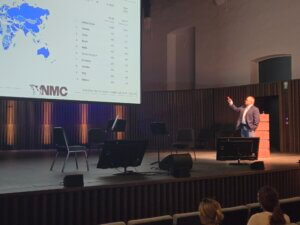 University and professor at Utrecht University’s Veterinary College, addressed udder health challenges for an evolving dairy industry. “Numerous challenges face the dairy industry that impact udder health,” Schukken stated. “Technologies continue to evolve that will help dairy producers reduce antimicrobial use, reduce the industry’s carbon footprint, improve animal welfare and improve cattle life expectancy.” Additionally, Schukken shared some current research and innovations that are fostering many positive outcomes to improve milk quality, udder health and animal welfare.
Furthermore, the three-day event revolved around the latest updates on mastitis and milk quality – presented by world-renowned mastitis experts. Topics included mastitis diagnostics, employee training and communication, machine learning, dairy equipment automation, data analytics, mastitis monitoring, antimicrobial stewardship, genomics, nutrition, treatment innovation through bacteriophage-derived endolysins and mammary gland immunology.
“This year’s NMC Regional Meeting was truly an unforgettable experience,” said Sarne De Vliegher, NMC Regional Meeting co-organizer and Ghent University, professor in veterinary law, deontology and practice management and M-teamUGent chair. “Speakers shared the latest innovations in the field of mastitis prevention, treatment and control.”
Sofie Piepers, also with the Ghent University, CEO of MEX and meeting co-organizer, added, “These leading udder health experts offered cutting-edge insights in a variety of topics – challenging attendees to ‘up their game’ in improving on-farm milk quality metrics. Plus, some presenters projected future technologies that may lead to enhanced milk quality.”
“Ghent provided a phenomenal setting to help NMC further its global reach,” said NMC President Keith Engel, business development manager – hygiene & milk quality at GEA Farm Technologies. “NMC leaders send a hearty thanks to Sarne and Sofie and their team for organizing an outstanding event that fostered outstanding networking opportunities and future collaborative projects.”
2025 NMC Scholars Represent Numerous Countries
The National Mastitis Council (NMC) selected Ridwan Adesola, University of Missouri, Columbia, Mo.; José Augusto Ferronatto, Penn State University, University Park, Pa.; Ana Beatriz Montevecchio Bernardino, University of Florida, Gainesville, Fla.; Alexandre Rico Fernandez, University of California-Davis, Davis, Calif.; Matías Goddard, Universidad Austral de Chile, Valdivia, Chile; and Gregory Rota, University of Ghent and University of Liège, Belgium, as the global organization’s 2025 Scholars. These graduate students won an expense-paid trip to attend the 64th NMC Annual Meeting, set for Jan. 27-30, in Charlotte, N.C., USA. The NMC Scholars program strives to support the development of future udder health, milking management and milk quality specialists.
Adesola, who holds a Doctor of Veterinary Medicine degree from the University of Ibadan, Nigeria, embarked on his University of Missouri journey by participating in a summer veterinary research scholars’ program, which involved working in a university laboratory. His current research focuses on molecular characterization of non-aureus staphylococcal and mammaliicoccal species, helping to explore methods to differentiate strains. Adesola shared that witnessing children, from the “Fulani” ethnic group, drinking raw milk directly from cows’ teats inspired him to study milk quality and food safety.
Ferronatto developed a passion for cows while growing up on his parents’ farm. He earned a veterinary medicine degree and did internships in biology and immunology. Ferronatto earned an MBA in agribusiness at the Luiz de Queiroz College of Agriculture, University of São Paulo, Brazil, where he worked on communication failures between veterinarians and farmers and how this impacts mastitis rates. Now a visiting researcher at Penn State University, Ferronatto is also a University of São Paulo PhD candidate. His research focuses on bovine mastitis and the bovine milk microbiome – an emerging area that challenges and expands traditional views on the disease.
Montevecchio earned her Doctor of Veterinary Medicine degree from Universidade Estadual Paulista Julio de Mesquita Filho, Botucatu-Brazil. Currently a PhD candidate, Montevecchio’s research focuses on improving the welfare of cows suffering from mastitis. She is investigating welfare implications of administering a transdermal non-steroidal anti-inflammatory drug (NSAID) to cows challenged with E. coli intramammarily. By closely monitoring behavioral responses, such as lying time, activity and rumination, alongside health indicators, like rectal temperature and mastitis severity, the study seeks to understand the impact of NSAID on cow well-being.
Rico, a veterinarian from Spain, completed the UC-Davis Master of Preventive Veterinary Medicine program and is currently a graduate student in the Graduate Group in Epidemiology. His research broadens the understanding of decision making in implementing selective treatment of clinical mastitis, using a stochastic partial budget analysis with Monte Carlo simulation. Involved in dairy production all his life, he has viewed the dairy industry as a farmer, practitioner, researcher, academic and consumer. With a goal of gaining experience in the United States, Rico earned an opportunity to work at DairyExperts in Tulare, Calif., under the mentorship of Alfonso Lago.
For his undergraduate thesis, Goddard investigated Enterococcus bacteria as agents of subclinical mastitis in dairy farms within the Valdivia, Chile region. This experience included hands-on field sample collection, which allowed him to observe the impact of mastitis on dairy producers and animal welfare. Goddard’s master’s degree program in microbiology focuses on diagnosing mammary pathogens. With a significant rise in Mycoplasma bovis outbreaks on area dairy farms, Goddard is studying the genetic diversity of Mycoplasma bovis strains isolated from cases of bovine mastitis and bovine respiratory disease in Chilean dairy farms.
A veterinarian and PhD candidate, Rota’s research investigates the potential impact of four well-studied bovine-associated non-aureus Staphylococcus isolates, which are known for their intriguing in vitro and in vivo traits. The study aims to understand how these isolates modulate virulence expression in Staph. aureus and Streptococcus uberis, and how they affect the immune response of bovine mammary epithelial cells when these bacteria coexist in the same niche. Besides studying in Belgium, Rota went to school at the Vetsuisse Faculty in Bern, Switzerland, following an intensive traineeship in ruminant health.

NMC Introduces Annual Meeting Theme: ‘Raising the Bar: Elevating Global Milk Quality’
Make plans to visit the “Queen City” – Charlotte, N.C., USA – for the 64th National Mastitis Council Annual Meeting, set for Jan. 27-30. The 2025 NMC Annual Meeting revolves around the theme “Raising the Bar: Elevating Global Milk Quality.”
NMC members will gather at the Sheraton Charlotte Hotel. Book your hotel room at: https://bit.ly/2025NMCannualmeetingHotel. The last day to reserve your hotel room is Jan. 4.
NMC Second Vice President Roger Thomson developed several new short courses*. You’re sure to find at least one that interests you. Check out the 2025 NMC Annual Meeting Short Course lineup. Topics and presenters are shown below.
Getting the Most from Your First NMC Annual Meeting (geared toward first-time attendees)
Past NMC Presidents
Evaluating Udder Health and Milk Quality Using New Web Software
Kaz Ingawa, Dairy Records Management Systems
Troubleshooting Milk Quality Issues Using Case Studies
Paul Virkler, Quality Milk Production Services, Blaine Melody, Lander Veterinary Clinic, and Andrew Lefeld, Maria Stein Animal Clinic
H5N1 (avian influenza) – A Novel Viral Mastitis Update
Zelmar Rodriquez, Michigan State University, et al.
Quantifying Antibiotic Use on a Dairy Farm and Adding to the Value of Using Culture-based Mastitis Treatment Decisions
Pamela Ruegg, Michigan State University, et al.
The Impact of Biphasic Milk Letdowns on the Quantity of Milk Harvested
Ron Erskine and Paola Bacigalupo, Michigan State University, and Matthias Wieland, Quality Milk Production Services
The Great Debate: What is the Ideal Frequency of Visits per Day for a Cow in Automatic Milking Units (Robot Milkers)?
Paul Peetz, Lely, et al.
Understanding Computer-generated Parlor Performance Reports
David Reid, Rocky Ridge Dairy Consulting, and Paul Rapnicki, Grande Cheese Company
Using The Teaching Parlor to Perform a Conventional Milking System Analysis
Roger Thomson, MQ-IQ Consulting LLC, Andy Johnson, retired dairy consultant, and small group coaches
Using The Teaching Parlor to Perform a Conventional Milking System Clean-in-place (CIP) Wash Analysis Including Slug Analysis
Roger Thomson, MQ-IQ Consulting LLC, David Reid, Rocky Ridge Dairy Consulting, and small group coaches
Using The Teaching Parlor to Complete the ‘2nd Annual Graded Milking System Evaluation Form’
Roger Thomson, MQ-IQ Consulting LLC, and David Reid, Rocky Ridge Dairy Consulting
How to Dry Off High-producing Cows. What Does the Research Tell Us?
Curt Vliestra, Boehringer Ingelheim, et.al.
Sanitizers and Germicides for Premises Biosecurity and Teat Hygiene
Jason Koerth, Ecolab, et.al.
Manage Waste Milk Pasteurizers and Feeding Waste Milk for Maximum Growth and Health
Sandra, Godden, University of Minnesota
*Short Course presenters and topics subject to change.
Watch your e-mail inbox and the NMC website for NMC Annual Meeting updates. The NMC Annual Meeting website will launch in late October and the November issue of Udder Topics will feature the meeting’s general session topics and presenters.
On a lighter note… Are you wondering why Charlotte is known as the Queen City? The city’s name honors Charlotte of Mecklenburg-Strelitz, the queen consort of British King George III during the time of Charlotte, North Carolina’s founding.
We look forward to seeing you in Charlotte!
NMC Webinar Features Assertive Mastitis Therapy
National Mastitis Council’s (NMC) Sept. 18 webinar, led by Tiago Tomazi, Merck Animal Health, addresses “Assertive Mastitis Therapy in an Era of Environmental Pathogens.” This free, one-hour educational offering starts at 2 p.m. Central time (USA/Canada).
Tomazi explains that keeping cows healthy is a key factor in ensuring dairy farm profitability. An ever-present concern on dairies, mastitis can lead to lost milk production, added treatment costs, inferior milk quality, decreases in reproductive efficiency, early herd removal and/or death. Learn how mastitis-causing pathogens affect milk production, how to strategically treat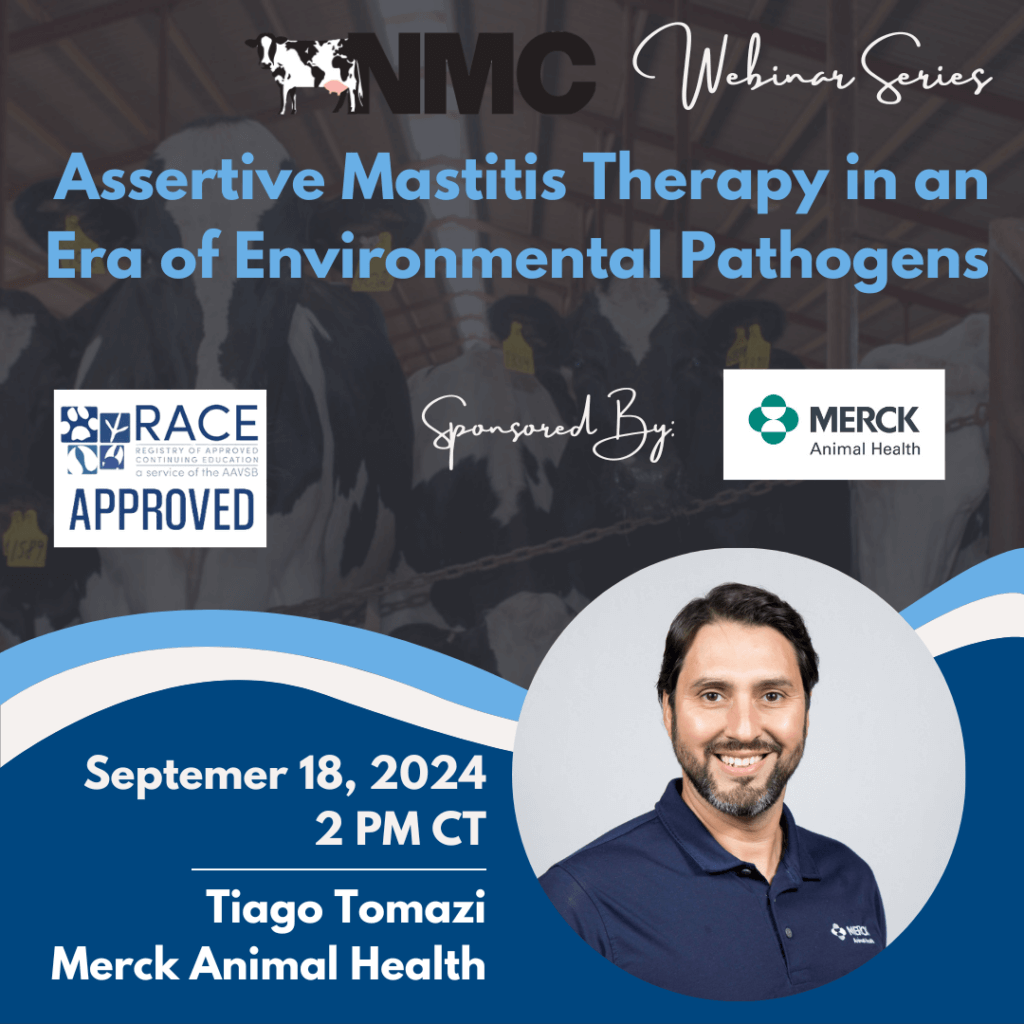 clinical mastitis based off severity, and factors to consider when implementing treatment.
The webinar’s key learning objectives include:
- Understand the distribution of mastitis-causing pathogens in conventional commercial dairy farms and their expected effect on milk production.
- Gain knowledge regarding the strategic treatment of clinical mastitis, according to pathogens and severity.
- Know the factors to consider when implementing pathogen-based treatment of clinical mastitis.
To register for this webinar, go to: https://bit.ly/NMCSept18Tomazi and follow the prompts. If you are an NMC member and cannot attend the live program, you may access the webinar recording after Oct. 2, at: nmconline.org.
Tomazi provides technical support to Merck’s U.S. dairy sales and marketing teams, specializing in mastitis-causing pathogens and treatment, and helps dairy producers achieve their goals. He grew up in Brazil where he earned his Doctor of Veterinary Medicine degree from the University of Passo Fundo and completed his master’s degree and PhD at the University of São Paulo, Brazil. Later, Tomazi completed his postdoctoral program at Cornell University. Throughout his career, Tomazi has led multiple research studies revolving around mastitis control.
This NMC webinar offers one Registry of Approved Continuing Education (RACE) credit, which helps veterinarians fulfill continuing education requirements. For further information about NMC’s RACE offerings, contact JoDee Sattler at: jdsattler@nmconline.org.
NMC Webinar, Presented in Spanish, Provides Milking Machine Basics
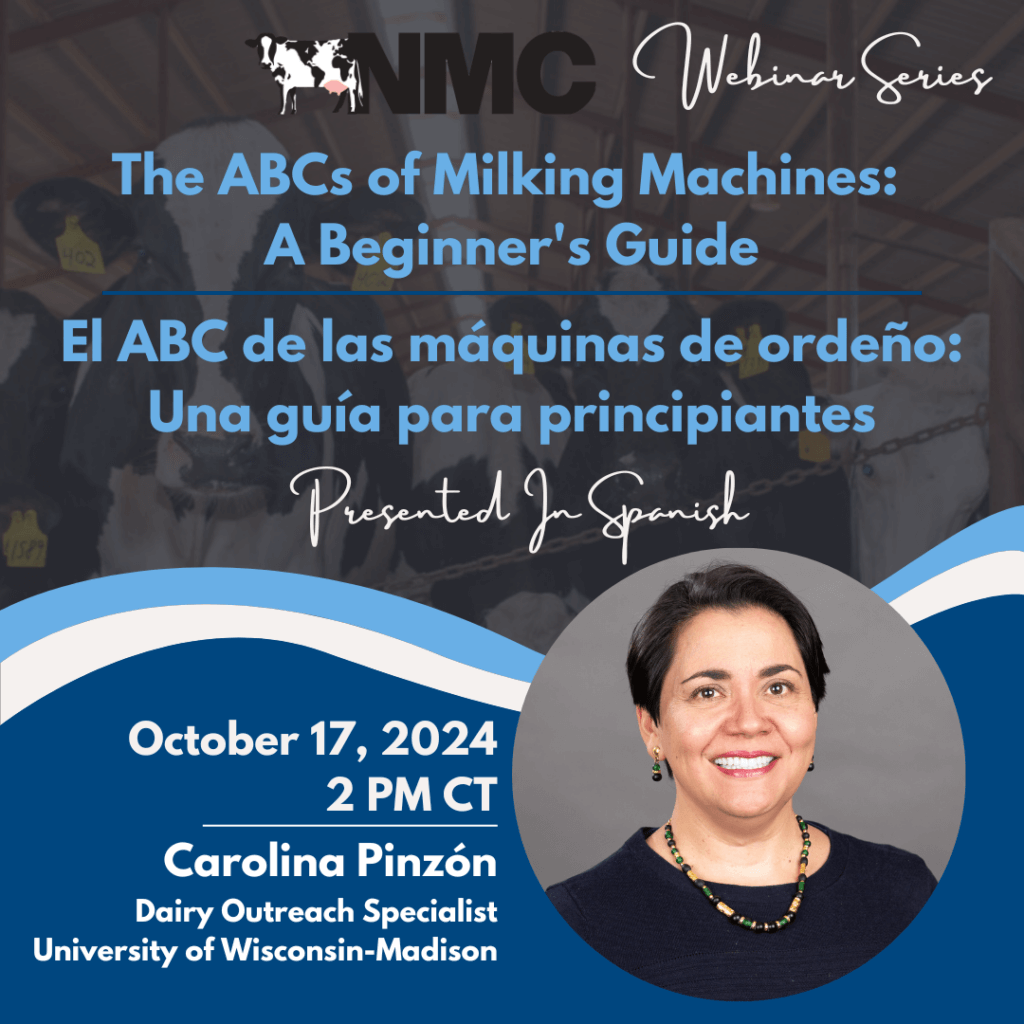 Join National Mastitis Council (NMC) for its Oct. 17 webinar – presented in Spanish – starting at 2 p.m. Central time (U.S./Canada). Carolina Pinzón, dairy outreach specialist at the University of Wisconsin-Madison, Division of Extension, will address “The ABCs of Milking Machines: A Beginner’s Guide.” The one-hour webinar is free.
To register for this free webinar, go to: https://bit.ly/NMCPinzonOct17. If you are an NMC member and cannot attend the live program, you may access the webinar after Oct. 31, at: nmconline.org.
This NMC webinar is designed for milk quality enthusiasts who are looking to build a foundational understanding of milking equipment. Participants will explore the components of a milking system and grasp the basics of vacuum, inflation and pulsation (VIP). The presentation simplifies these concepts while illustrating how they work together for milking efficiency and milk quality.
Pinzón holds a bachelor’s degree in animal science from the Universidad Nacional de Colombia and master’s degree in dairy science from the University of Wisconsin-Madison. With more than two decades of experience in the dairy industry, Pinzón has worked as a herd manager, milk quality research assistant, training specialist for a milk equipment manufacturer and milk processor, and as an independent consultant. She is passionate about integrating research findings into high-quality outreach education programs that are focused on milk quality and workforce development in dairy farms.
Submit Your Udder Health Research for NMC’s Technology Transfer Session
The National Mastitis Council (NMC) opened its submission site for the 2025 Technology Transfer Session (TTS), which will be held in conjunction with the 64th NMC Annual Meeting, Jan. 27-30, in Charlotte, N.C., USA. Manuscripts are due Sept. 30.
NMC Research Committee members will review submitted papers during October and inform authors in November regarding the status (accepted or rejected) of their paper(s). The review committee considers these factors when evaluating submitted papers:
- Manuscript is based on accepted scientific or educational practices.
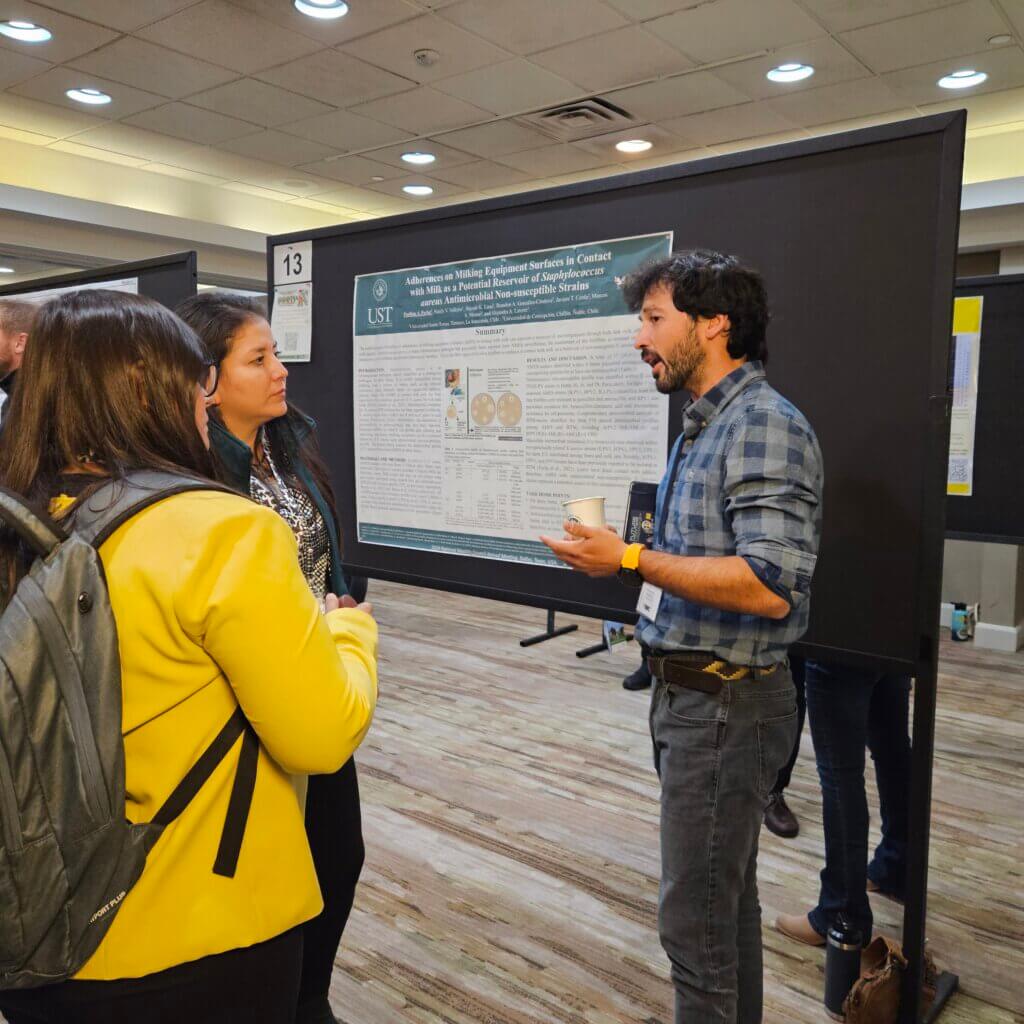
The NMC Technology Transfer Session supplements the annual meeting program by providing additional information through posters and in-person interaction.
- Subject matter aligns with NMC’s mission and goals.
- Work reported is complete.
- Data and statistical validity are presented.
- Reasonable conclusions are drawn based on the presented data.
- NMC policy on commercialism is not violated.
- Manuscript is written in English.
NMC accepts four types of papers:
- Research articles
- General interest articles
- Review articles
- Case reports
Each article should contain an introduction, materials and methods, results and discussion, conclusions/recommendations, and references. When authors submit papers, they must include an interpretive summary and keywords. However, these are not included as part of the article.
NMC strives to provide quality papers – focused on educational content – which is free of commercial influence or bias. Manuscripts and posters are not to be used as platforms for commercial sales, promotions and/or advertising. Excessive use of brand names, product names, trade names and/or trademarks is not allowed.
TTS supplements the NMC Annual Meeting program by providing additional information through posters and one-on-one interaction. Ten posters will be presented orally during the Research and Development Summaries Session on Jan. 29.
Author instructions may be found at: https://catalyst.omnipress.com/#event-home/nmc_tts_2025. For more information, contact JoDee Sattler (jdsattler@nmconline.org) or Anja Sipka (ass233@cornell.edu).
How Does Dry-period Mastitis Impact Reproductive Efficiency? Examining the Chain of Effects
By Tiago Tomazi, Dairy Technical Services, Merck Animal Health
Reproductive performance is a vital driver of profitability on a dairy and can be impacted by several diseases that occur during the dry period, especially mastitis. During the last three decades, several published studies have investigated the impact that clinical or subclinical mastitis post-calving has on reproductive performance.1,2,3
A meta-analysis that combined data from 29 separate studies conducted by Ohio State University in 2019 set out to measure the effects of mastitis on the reproductive performance of dairy cows.3 Comparing cows diagnosed with mastitis to those with no mastitis events, the authors discovered differences in the following reproductive measures4:
- Increased days to first service
- Increased days open
- Differences in pregnancy per artificial insemination
- Greater pregnancy loss
Importance of the dry-off period
This data clearly demonstrates that mastitis post-calving has detrimental effects on reproduction. Given that more than 50 percent of intramammary infections (IMIs) in early lactation originate during the dry period, this provides even more incentive for producers to take mastitis prevention measures during the dry period.5
Cows’ greatest susceptibility for mastitis occurs during the first two weeks and the last two weeks of the dry period.2
During the first two weeks of the dry period, the discontinuation of teat dipping leads to an increased bacteria population on the teat ends and termination of milking halts the natural flushing effect that helps remove pathogens from the teat canals. Furthermore, many quarters have a delay or failure to form an adequate keratin plug, which helps seal teat ends from bacterial penetration. To combat these risk factors, the use of dry cow therapy and an internal teat sealant at dry-off are valuable strategies to reduce the risk of new IMIs during the dry period.
During the pre-fresh risk period, management practices designed to maximize and supplement the cow’s immune defenses and minimize bacterial challenge from the environment are essential.
Prevention is key
IMI during the dry period can have a dramatic impact on the incidence and distribution of mastitis in the next lactation. Subsequent mastitis events that occur during the breeding risk period can have a profound negative effect on fertility.1,2,3
This impact is felt on the bottom line. The average value of a new pregnancy is worth $222-$278, while each day open can cost a producer $3-$6 and a lost pregnancy costs $323-$555.6
Dry-off done right
How can producers nail dry-off? It starts by consulting with your herd health veterinarian to create a comprehensive dry cow program to prevent new IMIs during this critical time.
But, just as importantly, it’s ensuring the farm’s protocols are followed correctly and consistently every time. This requires quality training, which is why Merck Animal Health offers a free Dry Cow Management training module through Dairy Care365. The five-lesson module helps train employees on how – and why – to complete these critical tasks.
Cutting mastitis losses
When mastitis does appear in early lactation, the costs steadily increase each day and can add up to $444 for a single case, so speed is of the essence.7 This is why Merck Animal Health offers a comprehensive portfolio of udder health solutions to manage each unique situation.
With the holistic M-Power approach, producers can help prevent new infections, detect issues sooner, treat quickly and effectively, and reduce stress throughout the transition period. For more information, visit Productive-Cows.com
References
1. Fuenzalada, M.J., P.J. Fricke, and P.L. Ruegg. The association between occurrence and severity of subclinical and clinical mastitis on pregnancies per artificial insemination at first service of Holstein cows. J. Dairy Sci. 2015;98(6):3791-3805.
2. Dahl, M.O., A. De Vries, F.P. Maunsell, K.N. Galvao, C.A. Risco, and J.A. Hernandez. Epidemiologic and economic analyses of pregnancy loss attributable to mastitis in primiparous Holstein cows. J. Dairy Sci. 2018;101(11):10142-10150.
3. Dolecheck, A., A. García-Guerra, and L.E. Moraes. Quantifying the effects of mastitis on the reproductive performance of dairy cows: A meta-analysis. J. Dairy Sci. 2019;102(9):8454-8477.
4. Bradley, A.J., and M.J. Green. The importance of the nonlactating period in the epidemiology of intramammary infection and strategies for prevention. Vet. Clin. North Am. Food Anim. Pract. 2004;20(3):547-68.
5. Bradley, A.J., and M.J. Green. The importance of the nonlactating period in the epidemiology of intramammary infection and strategies for prevention. Vet. Clin. North Am. Food Anim. Pract. 2004; 20:547-568.
6. De Vries, A. Economic value of pregnancy in dairy cattle. J. Dairy Science. 2006;89(10): 3876-3885.
7. Rollin, E., K.C. Dhuyvetter, and M.W. Overton. The Cost of Clinical Mastitis in The First 30 Days of Lactation: An Economic Modeling Tool. Prev. Vet. Med., vol. 122, no. 3, 2015, pp. 257-264. Elsevier BV, doi:10.1016/j.prevetmed.2015.11.006.
*Merck Animal Health provided this article. The National Mastitis Council does not support one product or business over another.
Reducing Delayed Milk Ejection is Possible and Often Simple
When it comes to milking cows, most would agree that the ultimate objective of udder preparation is to facilitate harvesting high-quality milk from cows as gently, completely and quickly as possible. With this goal in mind, Paola Bacigalupo Sanguesa, Michigan State University (MSU) Extension dairy educator, addressed delayed milking ejection (DME) during her 2024 National Mastitis Council (NMC) Annual Meeting presentation.
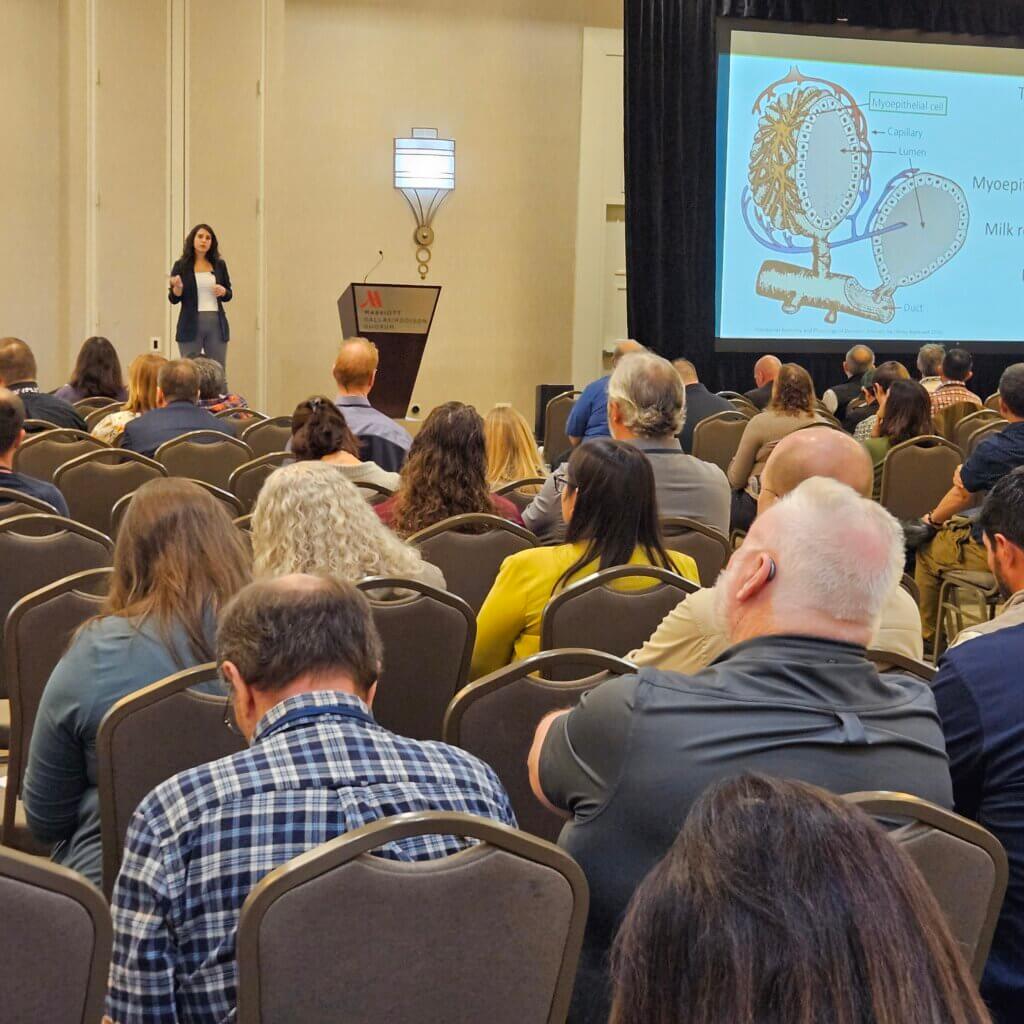 Bacigalupo Sanguesa briefly reviewed the milk ejection reflex, often referred to as milk letdown. In lactating cows, the alveoli (mammary gland secretory tissue) are constantly creating milk. Between milkings, 80 to 100 percent of a cow’s milk is stored in the alveoli. The remaining milk is stored in the ducts and cisterns, which connect the secretory tissue with the teat opening.
“While the cisternal milk is readily available for harvest, the alveolar milk needs to be actively removed by the milk ejection reflex,” Bacigalupo Sanguesa noted. Teat tactile stimulation (udder prep) signals the central nervous system to release oxytocin from the pituitary gland. Oxytocin causes the myoepithelial cells to contract around the alveoli, which results in milk expulsion to the ducts and cisterns. In addition to the tactile stimulation, the milk ejection reflex needs time to expel the alveolar milk. Bottom line: sufficient time is needed for milk ejection reflex to achieve an efficient milking process.
What is DME?
When milk ejection disturbance occurs at the start of milking, “bimodal” milk flow (also known as DME) results. Bacigalupo Sanguesa defined DME as the interruption between cisternal milk and alveolar milk. “Depending on the level of udder filling, milk will flow for a short period of time (cisternal portion), followed by a marked reduction or even no milk flow, followed by a second increase of milk flow (alveolar portion) that continues for the rest of the milking,” she explained. This is termed as “bimodal milk flow.” The greater the fraction of milk that is stored in the alveolar portion, the more likely a prolonged period of bimodal flow can occur.
Bacigalupo Sanguesa shared results from a Michigan study that included 60 herds. On average, 25 percent of cows within each herd experienced DME during milking. In one herd during a single milking shift, 45 percent of cows experienced DME, but only 98 percent of those DME experienced bimodal milk flow. “Since not all delayed milk ejection results in bimodal milk flow, the term DME is better suited for this issue,” she remarked.
Provide sufficient teat tactile stimulation
What causes DME? Bacigalupo Sanguesa addressed premilking stimulation, lag time, stage of lactation, parity and stress as risk factors. If teat tactile stimulation is not provided as part of the milking prep routine, expect some degree of DME.
One study evaluated various vacuum levels – with and without premilking stimulation. “Not surprisingly, the incidence of bimodal milkings were significantly higher (92 percent) in the non-stimulation treatment group than in the stimulation treatment group. There’s clear evidence that the lower the tactile stimulation time, the higher proportion of cows with DME.
Allowing too little or too much lag time can result in DME. Watters et al. (2012) applied nine treatments combining two stimulation regimes with 0, 60, 90, 120 and 240 seconds of lag time, and observed that the group with no lag time had the highest incidence of bimodal milking. The group with 240 seconds had the second highest. Lag time (low, lack of or excess) strongly influences DME.
Regarding stage of lactation, several studies showed that cows in more advanced stages of lactation have more risk of DME compared with cows in earlier stages. “This is explained by the lower udder filling level in later lactation stages, which have a lower cisternal milk fraction compared with cows in earlier lactation,” said Bacigalupo Sanguesa.
The MSU educator said there’s not a clear association between DME and parity. Recent studies had conflicting results.
Prevent cattle stress
Bacigalupo Sanguesa noted that teat tactile stimulation can fail to initiate an oxytocin release response when cows are stressed, such as experiencing something new (being milked) in an unfamiliar environment (milking parlor). Unfortunately, these mechanisms are not fully understood.
From a health perspective, one study looked at multiple health events and management practices. Only lameness and vaccination were found to be a risk factor for cows with chronic DME more than seven days when compared with cows with no DME milkings over the same period.
Tools to identify DME
Fortunately, multiple tools can identify DME – with a range of costs, expertise needed and practicality. The simplest, lower-cost option is to visually track the lack of milk flowing into the milk cluster after unit attachment. However, this is the most time consuming relative to the amount of data collected. The person collecting data can record the letdown time (LDT) and the presence of milk flow that is not discontinued. For bimodal milk flows, the person collecting data must distinguish between the first and second increment of milk flow. “LDTs less than 30 seconds are considered normal milk ejection, whereas LDTs ≥30 seconds are considered DME,” Bacigalupo Sanguesa stated. “This option is not viable for large samples of milkings and it might be less accurate than other methods.”
The Lactocorder is considered the “gold standard” – for identifying DME. This device requires some technical knowledge and oversight during data collection. The Lactocorder automatically evaluates and categorizes milking as bimodal or normal.
Another option is to integrate milk flow meters into the milking parlor. This technology records milk flow rates for individual milkings in four intervals after cluster attachment: 0-15 seconds, 15-30 seconds, 30-60 seconds and 60-120 seconds. Cornell University researchers defined DME when milk flow rate during the 15- to 30-second, 30- to 60-second or 60- to120-second intervals was lower than the previous interval. For comparison, they used Lactocorders. Results showed moderate sensitivity (73 percent) and high specificity (94 percent) for the on-farm milk flow meters.
With a different approach, MSU researchers evaluated DME using vacuum recorders (VaDia, BioControl). (See below.) They collected milk flow rates from parlor software for the four intervals during the same milking. From the vacuum recording analysis, they obtained LDT (seconds) after unit attachment by analyzing the milking vacuum records. Based on LDT, cows were categorized as having DME (LDT ≥30 seconds) or normal milk ejection (LDT <30 seconds). LDT and milk ejection category were matched to milk flow records during the four intervals.
“The analysis showed that milk flow rate at the 30- to 60-second interval was the best to identify DME milking,” Bacigalupo Sanguesa stated. “For our sample, a cutoff of 4 pounds per minute (1.8 kg per minute) had the best combination of specificity (87 percent) and sensitivity (65 percent) to identify cows with DME. This is another practical method to identify and monitor DME.” By organizing the 30- to 60-second interval records in a spreadsheet – from lowest to highest value and using a cutoff of 4 pounds per minute (1.8 kg per minute) (or different herd-specific cutoff) – the DME incidence for an entire herd, milking group(s) or shift can be calculated.
Evaluations via vacuum recorders
As portable devices, Bacigalupo Sanguesa noted that VaDia vacuum recorders can be attached to a milking unit cluster to collect individual milking data. Thus, they offer a practical option for collecting data because they do not interfere with a milking technician’s work nor the milking process. Plus, they don’t require constant user supervision.
Once milking records are collected, the Vadia software analyzes the data and multiple metrics can be obtained from the sample, including short milk tube vacuum, mouthpiece chamber vacuum, milking machine time and LDT. LDT can be used as a means to classify milkings as DME or normal.
New York researchers validated VaDia vacuum recorder use. They connected portable milk flow recorders and digital vacuum recorders to the same milking unit for 241 cow milkings and found that, compared with the Lactocorder, VaDia vacuum recorders have a high specificity (92 percent) and moderate sensitivity (65 percent) to identify DME.
Why worry about DME?
As one would hypothesize, DME negatively influences cows, people and parlor efficiency. Simply stated, DME impairs udder health via two primary routes. During the transient low or no milk flow in DME, milking vacuum can penetrate the teat and mammary gland, and collapse the teat, allowing the cups to climb up and interfere with blood flow. Second, teats lose contact with the liner and this leads to increased mouthpiece chamber vacuum – inducing teat congestion.
DME reduces milk production. A Michigan study found that cows with mild (LDT = 30-60 seconds) and severe DME (LDT >60 seconds) produced 6.8 and 4 pounds (3.1 and 1.8 kg) less milk, respectively, than cows with no DME. Wieland (2023) observed a negative association between DME and average daily milk yield. Similarly, the MSU group used records from 8,907 cows from four farms milked three times a day to calculate the percentage of DME (DME%) over 10 days from an available dataset (Bacigalupo Sanguesa et al., 2023a).
Parlor efficiency can falter, due to DME, by increasing machine on-time, which decreases the parlor turnover rate. Numerous studies concur that machine on-time is longer when teats are not stimulated. This yields more DME and poor parlor efficiency.
Furthermore, DME may represent an animal welfare concern. During DME episodes, teats are exposed to high vacuum, which typically results in cows expressing uncomfortable behaviors, such as shifting their weight on their back legs, kicking and attempting to remove the cluster.
DME influences cow-assisted unit removals
Bacigalupo Sanguesa described one of her studies where her research team recorded early unit removal during the first two minutes. Researchers found that 44.9 percent of the milkings had DME and 36 percent had an early cluster removal. More than 83 percent of the early removals were also DME milking. “This shows that cow-assisted milking unit takeoffs are more common in DME milking and this may be due to discomfort.”
Undesirable cow behavior also influences employee safety and satisfaction. Kicking cows pose safety issues. Early cluster removals require milking technicians to reattach milking units, which often need to be cleaned. “These extra tasks might put more pressure on workers to complete the milking shift,” Bacigalupo Sanguesa remarked.
In summary, Bacigalupo Sanguesa told NMC Annual Meeting attendees that reducing DME is possible and often simple. Implement corrective measures based on the dairy’s DME risk factors. “Monitor the incidence of DME to know where the farm is initially, the impact of corrective measures implemented and ensure that goals are being met.”
To read Bacigalupo Sanguesa’s complete proceedings paper, which includes cited references, log into the NMC Member Center. Then, click on the Proceedings Library icon.
American Society for Microbiology Publishes Article Linking Stable Flies and Bovine Mastitis
The U.S. Department of Agriculture’s National Animal Health Monitoring System reported mastitis in 99.7 percent of all U.S. dairy operations. Pathogenic bacteria and other microbes cause the condition, though the exact mechanisms of transmission – especially by flies, which are known to potentially play a role in many dairy farm diseases – haven’t been clearly elucidated.
A study published in mSphere, an American Society for Microbiology journal, identified Stomoxys flies (also known as stable flies) as carriers of pathogenic bacteria that cause bovine mastitis. Researchers at the University of Wisconsin-Madison sequenced microbial communities from these biting flies at two connected dairy farms and then compared those findings to manure samples from the same farms. In both samples, they identified bacterial taxa associated with bovine mastitis.
Notably, the researchers found that the pathogenic microbes, which included colonies of Escherichia, Klebsiella and Staphylococcus bacteria, were fairly rare and scattered in the manure samples. In the fly samples, however, those same species showed dramatically higher abundance. That mismatch strongly suggests that the pathogenic bacteria readily colonize and persist in the fly gut.
Flies: bacteria ‘reservoirs’
Previous studies have linked stable flies to bovine mastitis, Coon noted, but most have focused on mechanical transmission by looking at pathogens that can stick to a fly’s body or legs and be transmitted when a fly lands on an open sore or opening in the cow’s body. The new work, she said, points to insect bites as an additional route of transmission. When a stable fly bites a cow, it injects salivary proteins that help it access and digest blood. That process, Coon said, offers an opportunity for the pathogens to pass from the fly’s microbiome to the cow’s body.
 Using high-throughput 16s rRNA sequencing, Andrew Sommer (a 2024 NMC Scholar) and Julia Kettner, both graduate students in Coon’s lab, analyzed internal samples from 697 flies and compared those to data from 106 manure samples, all collected from two dairy farms in southern Wisconsin. The manure samples showed a significantly higher diversity of bacterial species than the fly samples, but taxa associated with mastitis were found in much higher abundances in the matched fly samples.
Find the infection source
“We know manure acts as a reservoir of pathogens, but they’re pretty patchy and environmental or opportunistic pathogens are generally at low abundance,” Coon said. “So, when a cow gets an opportunistic or environmental kind of bovine mastitis infection, we want to know how it got there.”
In previous work, Coon investigated the role of insect-microbiome interactions in mosquitoes. She launched the new study with support from UW’s Dairy Innovation Hub, which brings together dairy farmers and researchers to support the state’s dairy industry.
In addition to implicating the microbiome of biting flies as a reservoir for pathogens, Coon said the new work may help guide better strategies for protecting cows from bovine mastitis – and even for protecting people from possible zoonotic infections. “I think there’s a lot of excitement about tapping these insect microbiomes as a resource for preventive or protective strategies on dairy farms,” she said. “But first we have to understand the fundamental processes underlying how these insects and microbes behave, and potentially contribute to disease transmission, in the field.”