

January 2025, Volume 48, No. 1
President’s message
By Keith Engel, National Mastitis Council President

NMC President, Keith Engel presenting during the 2024 NMC Regional Meeting in Ghent, Belgium.
I look forward to welcoming you to the 64th Annual Meeting of the National Mastitis Council (NMC) in Charlotte, N.C., USA! It has been a true honor to serve as your 60th president and I am very thankful for all the hard-working, intelligent and humble servants who have a passion for milk quality. They make this organization great. I truly appreciate their dedication and hard work over this past year.
We have an exciting annual meeting this year with an incredible program, 16 outstanding Short Course opportunities, Technology Transfer Session, committee meetings and time for all of us to meet. The 2025 NMC Annual Meeting has a truly appropriate theme: “Raising the Bar! Elevating Global Milk Quality.” I would like to give a huge thank you to Justine Britten and Roger Thomson, their planning committees and NMC staff for organizing a top-notch event. This year, for the first time, we will offer simultaneous interpretation (English to Spanish) for the General Sessions and Research and Development Summaries Session.
From “Boots on the Ground” in Dallas, Texas, USA, to the NMC Regional Meeting in Ghent, Belgium, to “Raising the Bar! Elevating Global Milk Quality” in Charlotte, NMC has been highly active and experienced a great year! We have moved from working on a strategic plan that has resulted in strategic actions that align with NMC’s mission to aid in ensuring NMC’s future success. Our mission statement was reviewed and updated.
NMC Mission Statement
The National Mastitis Council is a non-profit professional organization devoted to reducing mastitis and enhancing milk quality. NMC promotes research and provides science-based information to the dairy industry on udder health, milking management, milk quality, animal welfare and food safety.
From the strategic plan, we created a certificate program with an initial offering for a certificate in Teat Scoring online and during the “Perform a Complete Milking System Analysis” Short Course. I want to thank Brenda Carter, Richard Hiley and the Teat Health Committee for getting the Teat Scoring certificate module developed and Roger Thomson and his team for doing this for the system analysis Short Course. NMC is looking to the future and has created a certificate program task force and partnered with the MILC group with the vision to expand its educational offerings with a certificate for successful completion.
For the first time this year, the National Dairy Quality Awards program expanded outside of the United States to Canada. With the right partner, we can further expand this program to other countries.
We’re also looking for ways to increase our global presence and opportunities to have meetings in other countries. NMC’s membership is 79.5% from North America, 11.1% from Europe, 5.4% from South America, 1.8% from Australia and 1.6% from Asia. Our website and social media have a larger presence outside of North America. Finding ways to connect with more members through avenues like the certificate program, webinars and meeting opportunities outside of the United States are key to growing globally.
A governance subcommittee was created and has reviewed all committee mission statements and meeting structure. This subcommittee is working on committee guides to make a smooth transition as committee members change. All committees have a board liaison that works with committees to help projects move forward.
I am extremely excited to see so many new members who have actively engaged in NMC projects. The lifeblood of this organization comes from its members – along with the work that gets done in committees and board of directors. Our future is bright!
Enjoy the 64th NMC Annual Meeting and plan to help us celebrate NMC’s 65th Anniversary in Birmingham, Ala., USA, Jan. 26-29, 2026.
Thank you for the honor to serve as your NMC president.
Keith Engel
NMC President
Gather with your NMC friends in Charlotte
“Elevate” you milk quality knowledge at the 64th National Mastitis Council (NMC) Annual Meeting, Jan. 27-30, at the Sheraton Charlotte Hotel, Charlotte, North Carolia, USA. This event will help the global dairy industry capitalize on available strategies to prevent, treat and control mastitis, enhance udder health and foster animal health and welfare.
“The 2025 NMC Annual Meeting revolves around the theme ‘Raising the Bar: Elevating Global Milk Quality’,” stated Justine Britten, NMC Annual Meeting program chair and Udder Health Systems laboratory director and field operations manager. For more than 60 years, NMC has “raised the bar” in reducing mastitis and enhancing milk quality – not just in the United States but also around the world. This year’s NMC Annual Meeting experience is another opportunity for NMC members to take their milk quality knowledge to the next level.
To view the meeting agenda and/or to register, go to: http://meetings.nmconline.org. NMC is preparing for and executing a “hybrid meeting” – with in-person and virtual attendance options available. Register by Jan. 9, before the registration rate increases.
Click this link to view the meeting agenda.
Learn about the Short Courses here. (This year’s NMC Annual Meeting includes several new courses.) Some Short Courses are full, so don’t delay registering for the NMC Annual Meeting.
Other highlights of the upcoming meeting include English-Spanish interpretation, Dairy Farm Tour, Silent Auction, which supports professional development efforts, and recognition of the National Dairy Quality Award winners, NMC Award of Excellence for Mastitis Prevention and Control recipient, and NMC Scholars.
NMC seeks Silent Auction items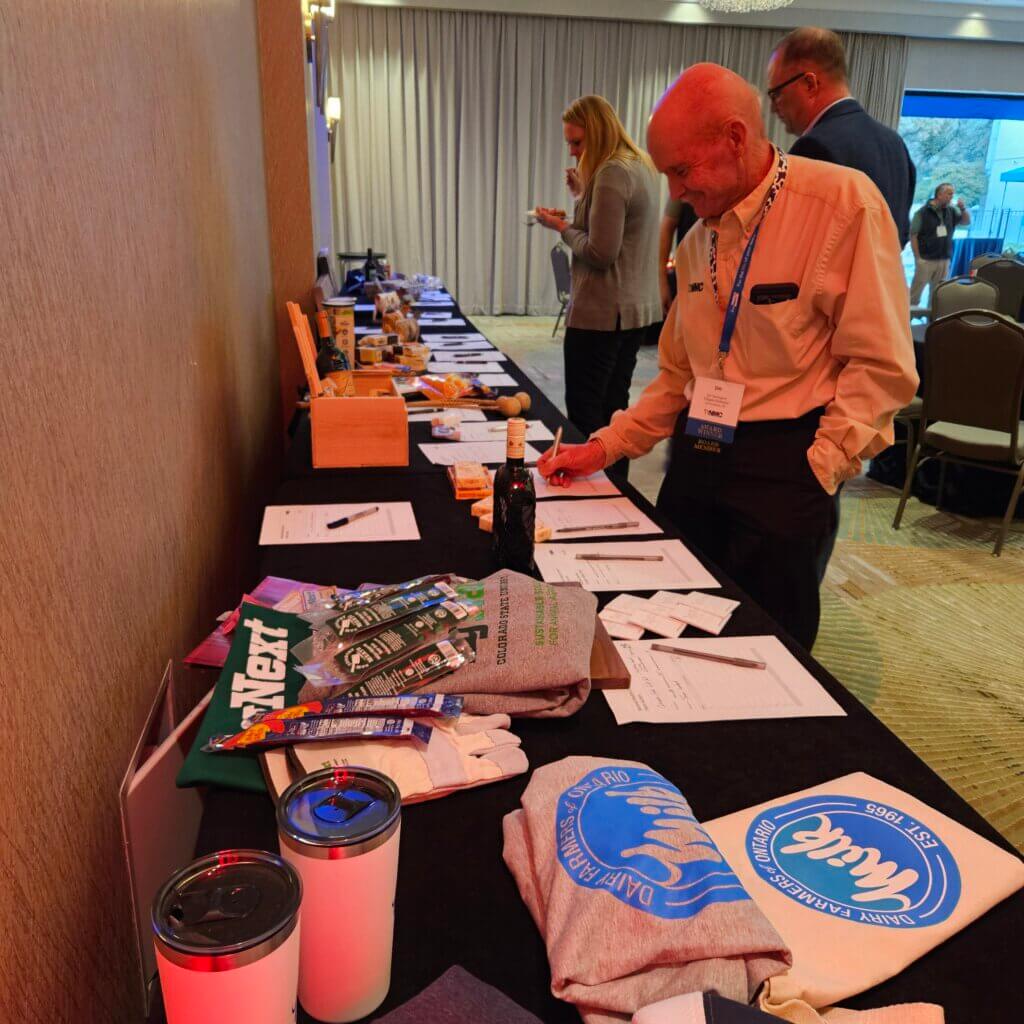
Back by popular demand is the National Mastitis Council’s (NMC) Silent Auction – held in conjunction with the NMC Welcome Reception on Tuesday evening of the NMC Annual Meeting. The focus is to hold an informal meet and greet and ask for bids on items donated by members.
NMC’s Silent Auction goal is 20 items. With this year’s meeting revolving around a global theme, consider donating an item that represents your homeland.
Click here to donate an item(s).
Money raised via the Silent Auction will be used to enhance professional development efforts. Auction item suggestions include cheese, techie gadgets, gift baskets, “local” items and adult beverages. Homemade items are also a big hit for our members.
For further information, contact Kyle Wieskus at: kyle@nmconline.org or call 952-758-2146.
Congratulations to the 2025 Research and Development Summaries Session presenters
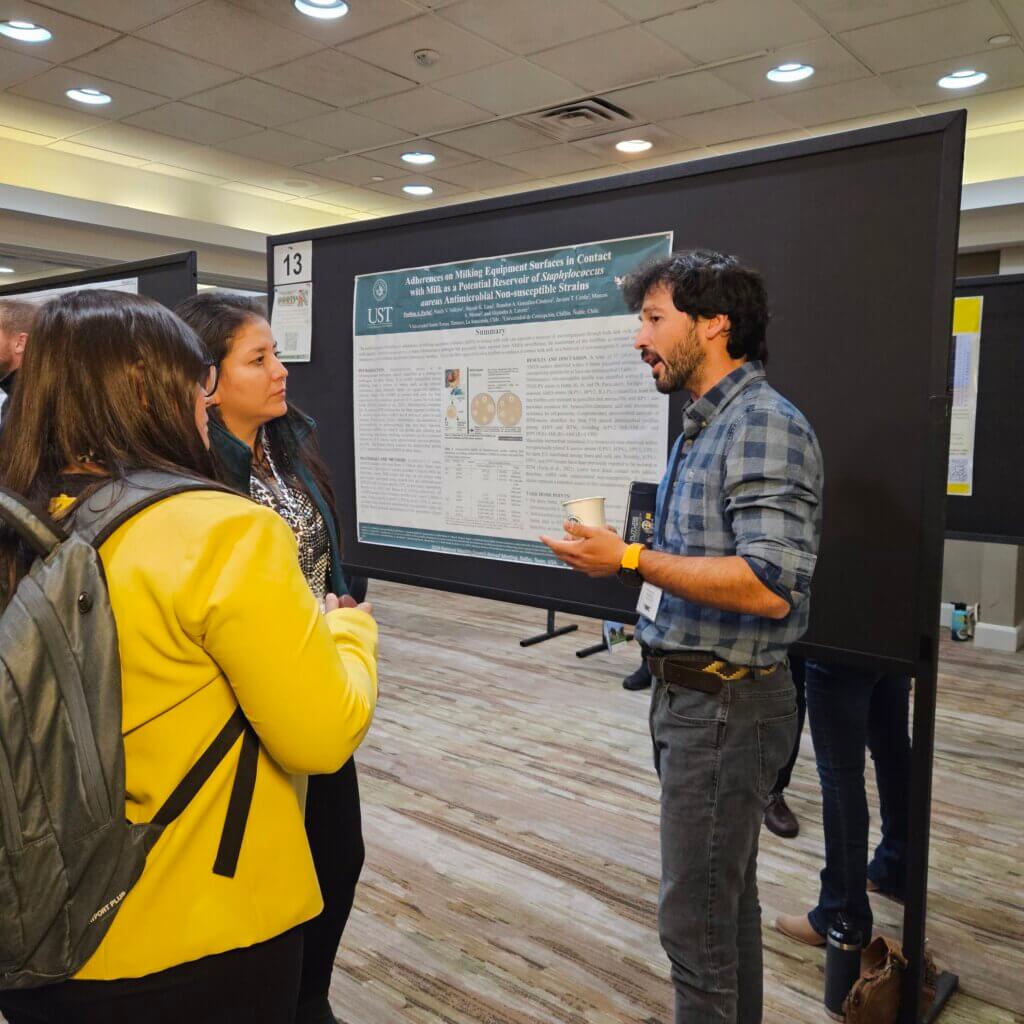
The National Mastitis Council (NMC) Research Committee accepted 37 research posters for the 2025 Technology Transfer Session (TTS), being held in conjunction with the 2025 NMC Annual Meeting, Jan. 27-30, in Charlotte, N.C., USA. Some researchers recorded summaries of their research, which will be available to in-person and virtual NMC Annual Meeting registrants on the NMC Annual Meeting webpage. Meeting registrants will receive an e-mail about how to access these recordings.
In addition, 10 posters (listed below) will be presented during the Research and Development Summaries Session, set to start at 2 p.m. Eastern time on Jan. 29.
- The Impact of Highly Pathogenic Avian Influenza H5N1 Virus Infection in a Dairy Herd
Felipe Peña-Mosca1, Elisha Frye1, Matthew MacLachlan1, Anna Rita Rebelo1, Pablo S.B. de Oliveira1, Michael Zurakowski1, Zoe R. Lieberman1, Lauren E. Meyer1, Will Leone2, Dennis Summers3, François Elvinger1, Daryl V. Nydam1, and Diego G. Diel1, 1Cornell University, Ithaca, New York, USA, 2Forthright Dairy Consulting, Wayne, Ohio, USA, 3Division of Animal Health, Ohio Department of Agriculture, Reynoldsburg, Ohio, USA - Herd-level Prevalence of Contagious Mastitis Pathogens in Alberta, Canada Dairy Herds Using Bulk Tank Milk Samples
Waseem Shaukat1, Kristen N. Kalbfleisch1, Diego B. Nobrega1, John P. Kastelic1, David Kelton2, Karin Orsel1, Jeroen De Buck1, and Herman W. Barkema1, 1University of Calgary, Calgary, Alberta, Canada, 2University of Guelph, Guelph, Ontario, Canada - Molecular Epidemiology and Antimicrobial Resistance in LactococcusIsolated from Cases of Non-severe Clinical Mastitis
Juliano L. Gonçalves, Quinn K. Kolar, Rinosh Mani, Srinand Sreevatsan, and Pamela L. Ruegg, Michigan State University, East Lansing, USA - Species Identification of Staphylococcus agnetisand Staphylococcus hyicus Isolates Using MALDI-TOF Analysis
Silvia Beschi, Sarne De Vliegher, Kristien Mertens, Serge Verbanck, Frank Pasmans, and Filip Boyen, Ghent University, Merelbeke, Belgium - Diagnostic Performance of a Novel Molecular Microarray Assay for Diagnosis of Bovine Intramammary Infections with Mycoplasma Species
Yasser Mahmmod1, Nicolaas Smit2, Holger Klapproth2,3, Marcelo Chaffer4, and Michael Zvonar5, 1Long Island University, Brookville, New York, USA, 2Safeguard Biosystems Holding Ltd., London, United Kingdom, 3University of Freiburg, Freiburg, Germany, 4Independent Researcher, Manitoba, Canada, 5Valley Veterinarians Inc., Tulare, California, USA - Genetic Diversity of Chilean Strains of Mycoplasma bovisIsolated from Bovine Respiratory Disease and Bovine Mastitis
Matías Goddard1, José Molina-Mora2, Luis Collado1, and Armin Mella1, 1Universidad Austral de Chile, Valdivia, Chile, 2Universidad de Costa Rica, San José, Costa Rica - Milking Behavior Dynamics in Holstein, Jersey, and Holstein x Jersey Crossbred Cows Affected by Clinical Mastitis in a Semi-automated Batch Milking System
Pablo F. Munoz-Boettcher and Pablo J. Pinedo, Colorado State University, Fort Collins, Colorado, USA - Preliminary Results of Characteristics of Mastitis Occurring on Large Conventional Dairy Farms Using a No-lactational Antibiotic Treatment Policy
Lara C.B. Juliano, and Pamela L. Ruegg, Michigan State University, East Lansing, Michigan, USA - Evaluation of Strain Typing Methods used for Staphylococcus chromogenesIsolates from Dairy Farms in the United States
Ridwan O. Adesola1, Pamela R.F. Adkins1, and John W. Barlow2, 1University of Missouri, Columbia, Missouri, USA, 2University of Vermont, Burlington, Vermont, USA - Effect of Supplemental Premilking Stimulation Provided Through High-pulsation Frequency on Milking Performance, Teat Tissue Conditions, Udder Health, and Well-being of Holstein Dairy Cows
Singh, H. Somula, and M. Wieland, College of Veterinary Medicine, Cornell University, Ithaca, New York, USA
Engage dairy producers in conversations to inspire change
It may seem cliché, but the adage – “it’s not what you say but how you say it” – rings so true for dairy business consultants when communicating with dairy business owners and their employees.
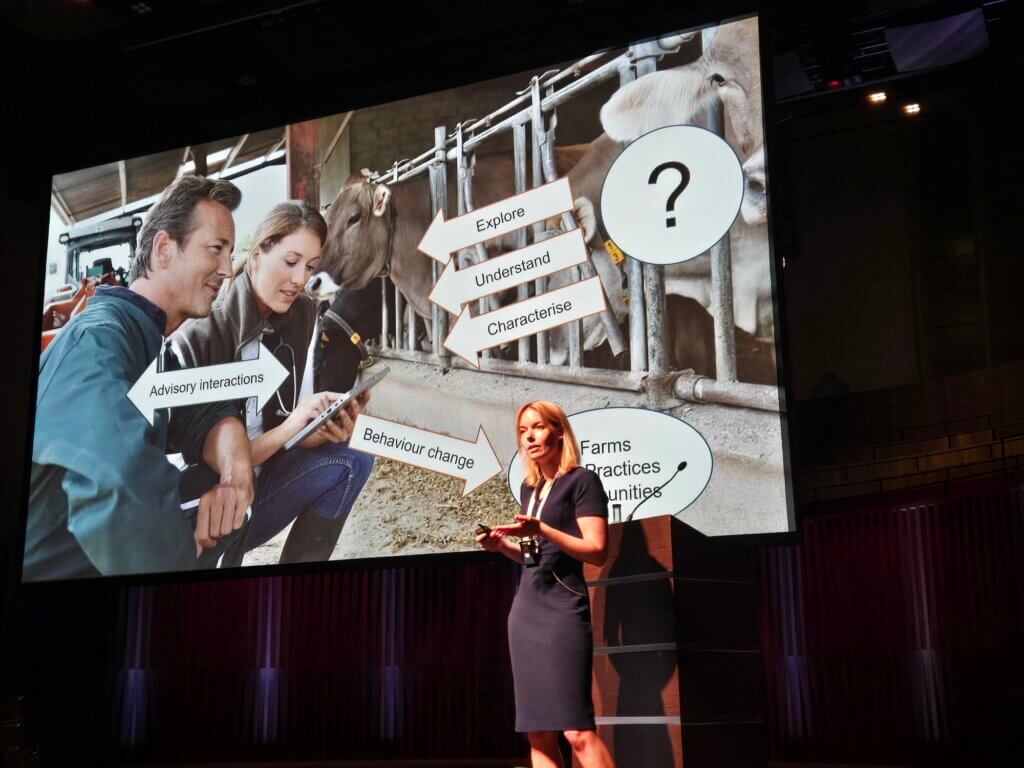
Alison Bard with The University of Bristol Vet School addresses the audience during the 2024 NMC Regional Meeting in Ghent, Belgium
During the 2024 National Mastitis Council Regional Meeting, held in Ghent, Belgium, Alison Bard, with The University of Bristol Vet School, Bristol, United Kingdom, explained that inspiring farm clients to engage with behavior change to improve herd health remains a critical challenge for the role of cattle veterinarians and other dairy farm consultants. “To engage with advisory messages on change, farmers report a desire to be acknowledged for their competence and decision-making abilities on farm, to experience negotiation, collaboration and choice in herd health planning processes, and to experience a trusting relationship with their veterinarian,” she stated. “These desires reflect core attributes at the heart of Self-Determination Theory (SDT).”
Bard described SDT as a macro-theory of human motivation. “SDT identifies three innate psychological needs being critical to integrating externally recommended behaviors with an individual’s sense of self to stimulate internalized motivation. These needs include the need to feel competence (perceived self-efficacy), autonomy (a sense of choice) and relatedness (connection with another). “Meeting or thwarting these psychological needs underpins differences in whether farmers strive to extend their on-farm competencies or become uninterested and apathetic toward positive change.”
Ask open-ended questions
According to Bard, current veterinary herd health management (VHHM) communication often conflicts with dairy producers’ (and employees’) psychological needs. Typically, veterinarians and consultants control herd health agendas as they rely predominantly on giving information, persuading and questioning – without getting farmers’ opinions, ideas and values through open questions. Bard called the traditional approach “paternalistic communication.” “This mismatch between current and desired communication practice presents a barrier to client behavior change, which may fundamentally undermine client engagement with VHHM activities,” she said.
To help veterinarians and other dairy farm consultants improve their communications with dairy producers, Bard recommends a “fruitful marriage” of SDT with Motivational Interviewing (MI). “MI is a collaborative conversation style that parallels and operationalizes the tenets of SDT,” she stated. Developed in medical sciences, this communication strategy strengthens a person’s own motivation to change. An evidence-based communication methodology, MI specifically explores and resolves ambivalence to influence the motivational processes that facilitate change.
To be successful, Bard explained that an interpersonal context of empathy, acceptance and partnership is critical to the MI process. Effective MI skills increase the frequency and strength of client arguments in favor of change (“Change Talk”), decrease client arguments in opposition to change (“Sustain Talk”) and, in turn, positively influence behavior outcomes. “This methodology offers veterinarians both context-relevant and evidence-based skills to enhance their advisory discussions on mastitis – in the pursuit of client engagement and behavior change,” Bard stated.
To learn more about Bard’s work with veterinarian-farmer communications, read this Journal of Dairy Science paper. More information on this topic can be found here and here.