
NMC names Pamela Ruegg the 2026 Award of Excellence winner
Pamela Ruegg, David J. Ellis professor of antimicrobial resistance and large animal clinical sciences, College of Veterinary Medicine, Michigan State University (MSU), received NMC’s 2026 Award of Excellence for Contribution to Mastitis Prevention and Control. Her previous roles include associate veterinarian, Kiel Veterinary Clinic, Kiel Wis.; assistant professor, health management, Atlantic Veterinary College, University of Prince Edward Island, Charlottetown, PEI, Canada;
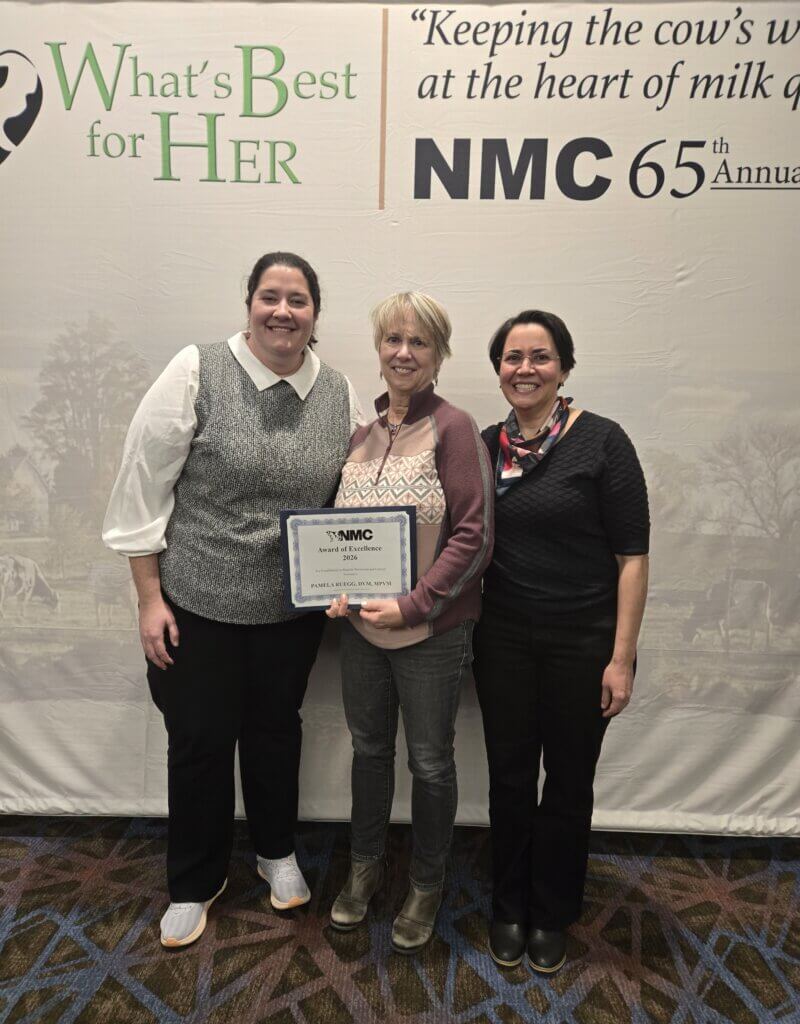
2026 NMC Award of Excellence for Contribution to Mastitis Prevention and Control presented to Pamela Ruegg. Pictured L to R: Quinn Kolar, Pamela Ruegg and Carolina Pinzon.
assistant professor and program leader, veterinary extension, large animal clinical sciences, MSU, East Lansing, Mich.; technical service manager, Monsanto Company; assistant and associate professor and extension milk quality specialist, University of Wisconsin, Madison, Wis.; and professor and chairperson, department of animal science, MSU.
This award recognizes an NMC member who has provided sustained contributions to mastitis prevention and control through research, extension and/or education, clinical practice or service to dairy producers. Boehringer Ingelheim sponsors the award.
With more than 40 years of experience working on mastitis and milk quality, Ruegg has dedicated herself to answering the toughest questions the dairy industry has faced – from the impact of tail docking on milk quality to how to reduce antimicrobial use. Throughout this time, she has remained dedicated and committed to making sure her initiatives are practical for farmers while also conducting cutting-edge applied research.
One of Ruegg’s former graduate students, Quinn Kolar, Cornell University senior lecturer in dairy herd management, explained that Ruegg’s research impact is “indisputable,” according to Scopus. Ruegg has published 173 peer-reviewed manuscripts with almost 75,000 citations and has an h-index (measurement of productivity and impact) of 50, which is impressive. Notably, in 2017 she was invited to write an article in the 100-year review issue of the Journal of Dairy Science on “Mastitis detection, management, and prevention.” This article has received 587 citations alone. “Dr. Ruegg’s exceptional research output and her active extension program are a powerful combination,” stated Kolar.
In supporting Ruegg’s nomination, Pamela Adkins, University of Missouri, wrote, “Pam Ruegg’s scientific contributions to udder health are unmatched. Her dedication to the science and energy level in the delivery of the message is contagious, providing positive momentum for everyone working in this field. Beyond her own work, she continuously provides opportunities to lift up the younger generation of dairy scientists, positively impacting the trajectory for their careers. On top of it all, she is the best storyteller in the bovine industry, able to bring everyone together with a good laugh. Pam is an inspiration and highly deserving of this award.”
Ken Leslie, University of Guelph professor emeritus and the first recipient of NMC’s Award of Excellence, described Ruegg as “a pre-eminent international authority on intramammary infection, mastitis control, milk quality and development of antimicrobial resistance in dairy cattle.” Leslie added, “She is clearly a world leader in both extension education and research. Few other individuals, if any, have such a wide range of experience and expertise in this area. As such, Pam is sought after as a source of knowledge from colleagues around the world.”
Carolina Pinzón-Sanchez, University of Wisconsin-Madison – Division of Extension, has worked closely with Ruegg for more than a decade. “Dr. Ruegg is synonymous with milk quality worldwide. Her research on mastitis management, milk quality and antimicrobial stewardship has set industry standards – providing farmers, veterinarians and researchers with practical tools and knowledge,” stated Pinzón-Sanchez. “Beyond her research, Pam’s mentorship has shaped the careers of many, including my own. Her guidance has been so meaningful that I affectionately refer to her as my ‘forever advisor’.”
Ronald Erskine, MSU professor emeritus, reflected on his 30-year history with Ruegg – noting her contributions to mastitis research excellence, outreach mentorship and service. “She has a long history as a champion for milk quality, while selflessly giving her time and effort to numerous professional organizations,” he commented. Plus, she has served NMC in numerous roles, including president, regional meeting and annual meeting speaker, regional meeting and annual meeting short course instructor, research committee and nominating committee.
New York takes home 4 of 6 Platinum NDQA awards
NMC: The Global Milk Quality Organization recognized six dairies with Platinum recognition via its National Dairy Quality Awards (NDQA) program. The Platinum Award winners are Gettyvue Farm LLC, Brian, Kevin and Terry Getty, Granville, N.Y.; Green Hill Dairy, Donald Janssen, Scipio Center, N.Y.; Larson Acres, Mike, Sandy, Ed and Barb Larson, and Jim, Luke, Dane and Brooke Trustem, Evansville, Wis.; Schultz Dairy, Dave Schultz, Sandusky, Mich.; Tollgate Holsteins, Jim and Karen Davenport, Ancramdale, N.Y.; and Walnut Ridge Dairy, Jacob and Steve Palladino, and Keith Chapin, Lansing, N.Y. To learn more about the Platinum winners’ milk quality strategies, read the January 2026 Hoard’s Dairyman Round Table by clicking on “2025” on the NMC NDQA webpage.
In addition to the six Platinum winners, there were 17 Gold and 13 Silver NDQA winners (listed below). Farms were nominated by U.S. and Canadian professionals, such as dairy plant field staff, veterinarians, extension specialists and Dairy Herd Information Association supervisors, who serve the dairy industry.
Gold Winners
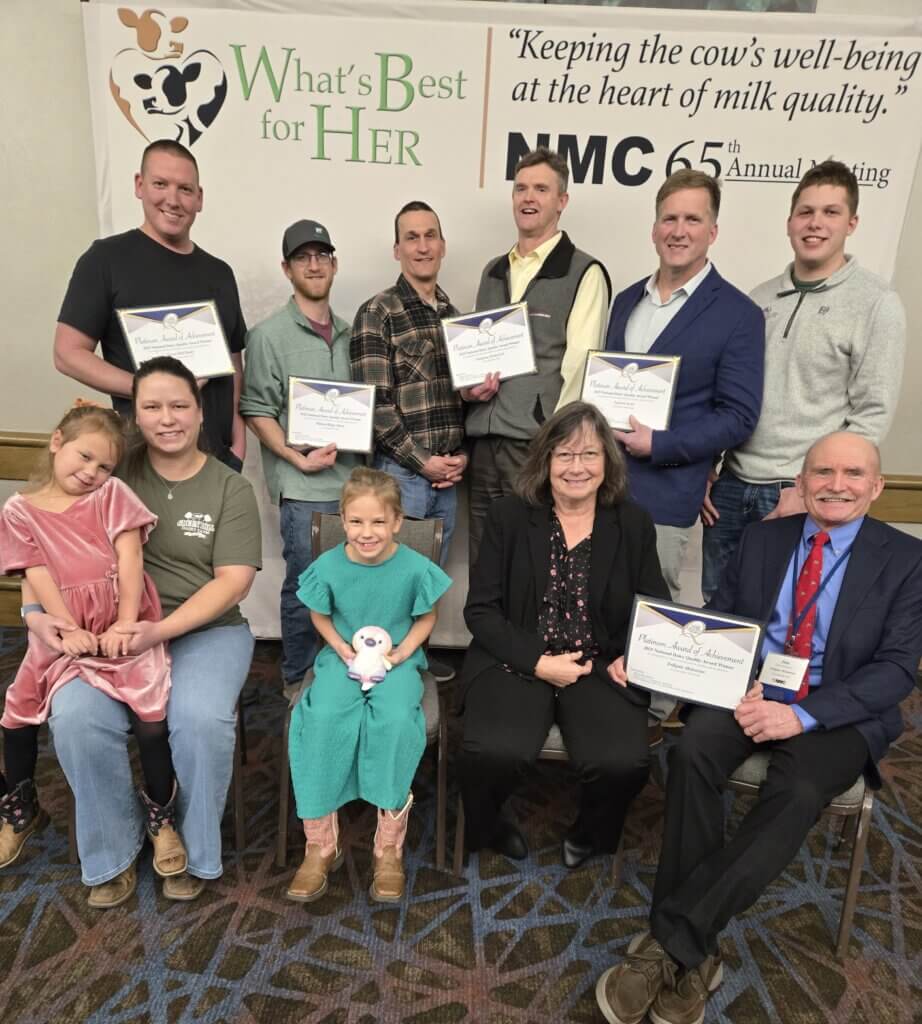
2025 NMC National Dairy Quality Award winners: (front row) Eve, Alex and Holly Janssen, Green Hill Dairy, and Kim and Jim Davenport, Tollgate Holsteins. (back row) Don Janssen, Green Hill Dairy, Jake Palladino and Keith Chapin, Walnut Ridge Dairy, Brian Getty, Gettyvue Farm, and Jim and Luke Trustem, Larson Acres.
Cottonwood Dairy, Jim Winn and Brian and Randy Larson, South Wayne, Wis.
Crandall Dairy Farms LLC, Brad, Monica and Mark Crandall, Battle Creek, Mich.
Dorner Farms, Cory and Maria Dorner, Luxemburg, Wis.
Ehlers Family Farm, Nick and Tim Ehlers, Theresa, Wis.
Endres Berryridge Farms LLC, Randy, Jeff and Steve Endres, Waunakee, Wis.
Evergreen Dairy Farm LLC, Kris and Carla Wardin, St. Johns, Mich.
Fischer-Clark Dairy Farm, Inc., Mike, Sue, Jon and Heidi Fischer, Hatley, Wis.
Hammond Dairy Farm LLC, Derrick, Jennifer, Kim and Norman Hammond, Dowling, Mich.
Horning Farms, Earl, Jeff and Mason Horning, and Katelyn Packard, Manchester, Mich.
Maly Farms, Inc., Butch and Ron Maly, and Alicia Sippl, Bryant, Wis.
Maskita Farm, Kevin Ten Have, Saint-Hyacinthe, Que., Canada
Mueller Farms LLC, Dennis, Eileen, Eric and Terra Mueller, Van Dyne, Wis.
Naatz Dairy Farm, William, Karen and Tristin Naatz, Mantorville, Minn.
Pollack Dairy LLC, Ben, John and Lynn Pollack, Van Dyne, Wis.
Shady Crest Holsteins, Scott, Michelle and Ross Herber, Utica, Minn.
VanPolen Farm, Duane, Laurie, Mike and Ken VanPolen, and Bethany (VanPolen) Benson, Marion, Mich.
Wargo Acres, Craig Carncross, Lodi, Wis.
Silver Winners
Cook Farms, Jeffery T. Cook, Lansing, N.Y.
Gallager Dairy Farm Inc., Chad and Mark Beck, West Branch, Mich.
Gasser Farms LLC, Virgil Gasser, Massillon, Ohio
Gasser Farms LLC, Virgil Gasser, Wooster, Ohio
Hafferman Hillside Dairy, Joshua Hafferman, Bowler, Wis.
Koppenol Dairy Farms Inc., Alan and Deborah Koppenol, and Ken Raterink, Coopersville, Mich.
Meffert Homestead Inc., Jeff and Luke Meffert, Waunakee, Wis.
Mierson Farms, Larry Mier, West Branch, Mich.
Mooville Dairy, Karl and MaryAnn Bontrager, Wolcottville, Ind.
Neeper Dairy, Nathan and Heather Neeper, Wapakoneta, Ohio
S & L Goebel Farms, Steve and Leo Goebel, Fond du Lac, Wis.
Stoney Acres, Bryce Harding, Wausakee, Wis.
Vevoda Dairy, John, Kris, Robert and Ronald Vevoda, Ferndale, Calif.
NDQA judges considered many criteria when reviewing finalists’ applications. In addition to milk quality indicators, such as somatic cell count (SCC) and standard plate count (SPC), judges looked at specific details about each operation, including milking routine, cow comfort, udder health monitoring programs, prevention and treatment programs, strategies for overall herd health and welfare, and adherence to drug use and record keeping regulations.
This year’s NDQA sponsors included Boehringer Ingelheim, BouMatic, Cargill, Conewango, GEA, Hoard’s Dairyman and NMC. This summer, nominee information for the 2026 NDQA program will be available on the NMC website (www.nmconline.org) and in Hoard’s Dairyman magazine.
NMC Annual Meeting presentations revolve around ‘What’s Best for Her”
NMC members from 15 countries, 32 U.S. states and three Canadian provinces gathered in Birmingham, Ala., USA, to focus on “What’s Best for Her. Keeping the cow’s well-being at the heart of milk quality.” The Jan. 26-29 event culminated with the group’s 65th annual meeting. NMC: The Global Milk Quality Organization attracts milk quality, mastitis and udder health researchers and graduate students, dairy producers and dairy industry partners. Meeting topics ranged from artificial intelligence to facility designs to cow comfort to milk harvest to small ruminant milk production.
 “NMC continues to expand its reach beyond mastitis prevention, treatment and control – realizing the importance of cow comfort, health monitoring, balanced nutrition and proper milk harvest preparation,” stated NMC First Vice President Roger Thomson, MQ-IQ Consulting and Michigan State University. That’s why we focused on ‘What’s Best for Her’ care during this year’s NMC Annual Meeting.” Additionally, NMC continues to add training programs throughout the year that foster higher milk quality and animal care standards.
NMC held a research poster competition for graduate students and selected Maria “Belu” Marin, University of Florida, as the winner. She presented “Characterizing Milk Flow Patterns in Dairy Cows Using Machine Learning: Implications for Milk Yield.” Marin won a one-year NMC membership and free registration to attend next year’s NMC Annual Meeting. To view this year’s NMC posters, click here.
During the NMC Annual Business meeting, members elected Daniela Bruno, University of California Cooperative Extension, Fresno, Calif., to the NMC board of directors. Executive committee members are Roger Thomson, Michigan State University and MQ-IQ Consulting LLC, Battle Creek, Mich., president; Alfonso Lago, DairyExperts, Inc., Tulare, Calif., first vice president; Christy Dinsmoore, Michigan Milk Producers Association, Novi, Mich., second vice president; Pamela Adkins, University of Missouri, Columbia, Mo., secretary-treasurer; and Justine Britten, Udder Health Systems, Meridian, Idaho, past president. Other board members include John Penry, Dairy Australia, Southbank, Victoria Cross, Australia; Rick Watters, AgroChem, Saratoga Springs, N.Y.; Amy Vasquez, Cornell University, Ithaca, N.Y.; Stephen Jones, DeLaval, Trinity, Fla.; Ian Ohnstad, The Dairy Group, Dorchester, Somerset, England; Justin Graham, BrooksCo Dairy, Quitman, Ga.; Jessica Belsito, IBA Inc., Sutton, Mass.; Jeffrey Bewley, Holstein Association, USA, Elizabethtown, Ky.; and Carolina Pinzón-Sánchez, University of Wisconsin-Division of Extension, Madison, Wis. Keith Engel, GEA Farm Technologies, Hampshire, Ill., retired from the board.
NMC thanks its annual meeting sponsors who contributed to the program’s success. The Diamond sponsors were Boehringer Ingelheim, DeLaval International and Zoetis. Platinum sponsors included AHV International, GEA Farm Technologies, Inc. and Merck Animal Health. The Gold sponsor was IBA Inc. Silver sponsors were AgroChem, Axiota and McLanahan Corporation. Bronze sponsors included ABS Global, Acepsis, Ecolab, Michigan Milk Producers Association, milc Group and Udder Health Systems. Dairy Partner sponsors included Christian Hill Dairy, Jones Family Farm, Luck-E Holsteins and Tollgate Holsteins.
The 66th NMC Annual Meeting is set for Jan. 25-28, 2027, in Jacksonville, Fla., USA. For additional information, go to: www.nmconline.org.
NMC members elect Danila Bruno to its board of directors
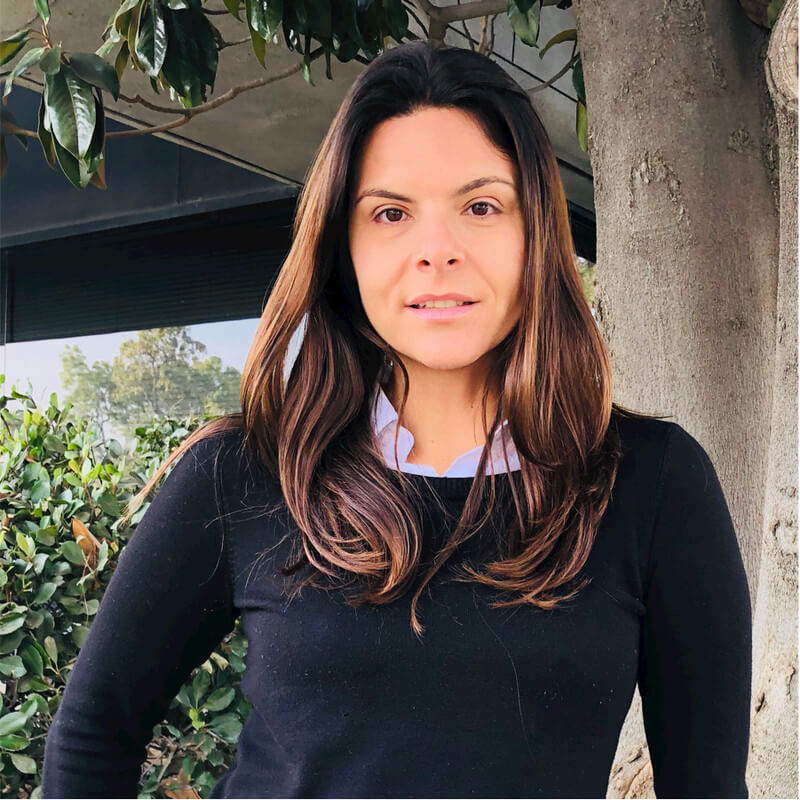 Daniela Bruno joins the NMC board with a career defined by a passion for mastitis and milk quality research, supported by extensive field and laboratory experience across both domestic and international dairy systems. Originally from Brazil, she grew up in Belo Horizonte, the capital of Minas Gerais, Brazil’s number one milk-producing state. She spent nearly every weekend on her grandfather’s dairy, where she developed a deep love for animals, especially cows. That early connection inspired Bruno to pursue veterinary medicine, leading her to earn her Doctor of Veterinary Medicine degree from the Federal University of Minas Gerais. During her first year, she joined a mastitis research group and contributed to multiple studies that sparked her long-term dedication to milk quality. She later completed an internship at the University of Florida and earned her PhD at the University of California, Davis under the mentorship of James Cullor.
These formative experiences shaped Bruno’s scientific approach and laid the foundation for nearly 30 years of commitment to advancing dairy herd health and mastitis prevention and control. She has worked as a private milk quality consultant, microbiologist/dairy specialist at Texas A&M Veterinary Medical Diagnostic Laboratory, and technical service specialist for DeLaval. For the past eight years, she has served as a dairy advisor with the University of California Cooperative Extension. In this role, she works directly with producers to strengthen udder health programs, enhance animal welfare and support sustainable dairy systems. She has led numerous studies on bovine mastitis and her research and outreach emphasize practical, science-based solutions that help farms improve milk quality, reduce disease risk and ensure food safety.
Bruno attended her first NMC Annual Meeting in 2014 and has been a committed supporter of the organization ever since. As she steps into her role as a board member, she looks forward to contributing her experience and working alongside fellow members to strengthen NMC’s impact and support the future of udder health worldwide.
NMC Scholars share annual meeting experiences
Editor’s note: Each year, we ask the NMC Scholars to share their perceptions, observations and personal experiences regarding their attendance at the NMC Annual Meeting. Here’s what the 2026 NMC Scholars had to say about their experiences.
View all the experiences here.
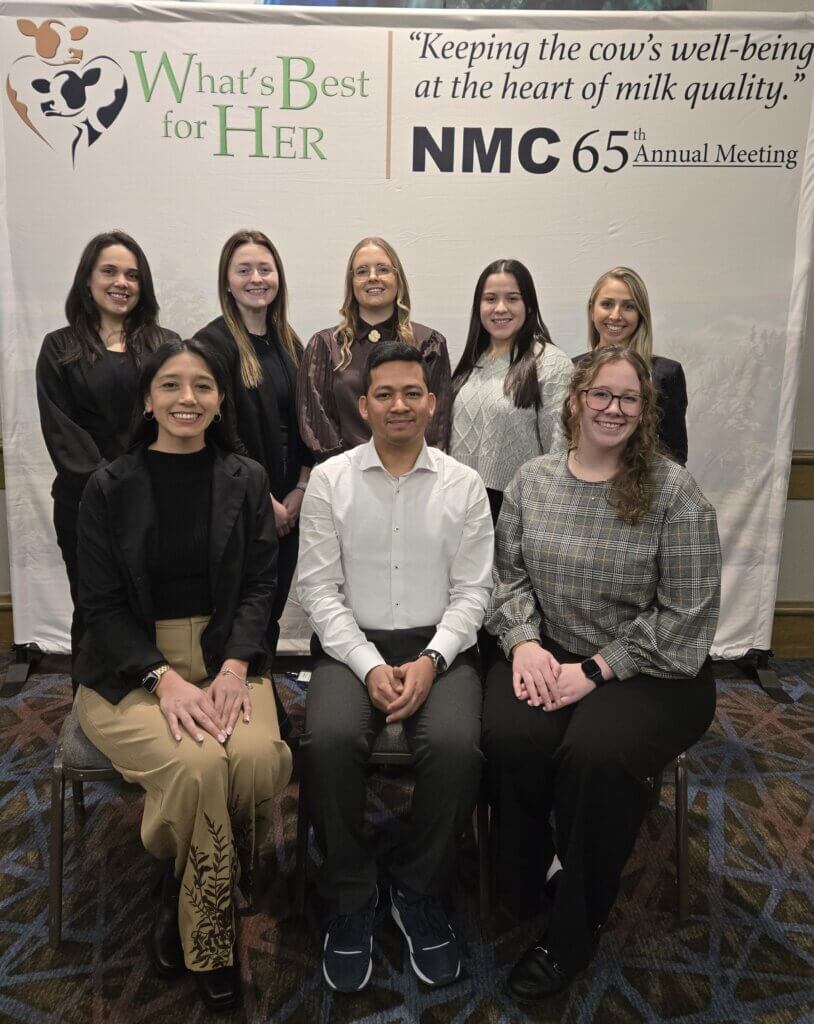
2026 NMC Scholars Front: Maria Marin, University of Florida, Delower Hossain, University of Milan (Italy), Emily Leonard, University of Minnesota-Twin Cities Back: Lara Juliano, Michigan State University, Elizabeth Plunkett, Ohio State University, Joanne Hanifin, Munster Technological University (Ireland), Anna Acosta, Pennsylvania State University, Karise Nogara, Federal University of Paraná (Brazil)
Rethinking dry-off strategies in modern dairy production: Are current protocols keeping pace with genetic progress?
Provided by AHV, an NMC Platinum Sponsor
 Dry-off represents one of the most critical physiological transitions in the productive life of a dairy cow, marking the shift from active milk synthesis to mammary gland involution and subsequent regeneration in preparation for the next lactation. This period is characterized by profound endocrine, metabolic and immunological changes within the mammary gland and the cow as a whole. Despite its importance, dry-off management practices have remained largely unchanged for several decades, even as the biological profile of the modern dairy cow has evolved dramatically. This disparity raises a fundamental question for contemporary dairy science. Are traditional dry-off protocols still biologically appropriate for today’s genetically advanced, high-producing cows?
Historically, dry-off strategies were developed when late-lactation milk yields were substantially lower than those observed today. In the 1970s and 1980s, cows typically produced 14-20 kg (31-44 pounds) of milk per day at the end of lactation, with declining lactation curves and limited persistency1. Under these conditions, abrupt cessation of milking resulted in moderate intramammary pressure, limited milk leakage, and a relatively predictable involution process. Keeping it in mind, NMC guidelines recommend a milk production of 15 kg (33 pounds) of milk at dry off2.
In contrast, the modern Holstein cow frequently produces more than 15 kg (33 pounds) of milk per day at dry-off, with some individuals exceeding these values due to enhanced lactation persistency and genetic selection for sustained milk synthesis3. Selection indices emphasizing milk yield, feed efficiency and persistency have fundamentally altered mammary gland physiology, extending the functional lifespan of secretory epithelial cells well beyond the traditional 305-day lactation paradigm3,4. Consequently, the physiological environment at dry-off today differs markedly from the conditions under which traditional protocols were validated.
One of the most significant challenges arising from high milk yield at dry-off is the rapid accumulation of intramammary pressure following abrupt cessation of milking. Elevated pressure has been associated with udder discomfort, increased incidence of milk leakage and stretching of mammary tissue, all of which compromise the integrity of epithelial tight junctions4,5. Disruption of tight junctions facilitates paracellular leakage of milk components, increases local inflammation and creates favorable conditions for bacterial invasion of the mammary gland6,7. Numerous studies have demonstrated that the risk of new intramammary infection (IMI) is highest during the early dry period, particularly in cows experiencing milk leakage8,9.
Although many studies show that intramammary antibiotics and internal teat sealants significantly reduce the risk of new infections, these interventions primarily address microbial exposure rather than the underlying physiological stress associated with excessive milk accumulation10. In effect, pharmaceutical tools have enabled the industry to tolerate increasingly high milk yields at dry-off without adapting the biological management of the transition itself. From a physiological perspective, this represents a reactive, rather than preventive, approach to udder health.
The disconnect between genetic progress and dry-off management becomes even more apparent when considering the endocrine and metabolic drivers of lactation in modern cows. Highly selected dairy cows maintain strong prolactin signaling, mammary blood flow and nutrient partitioning toward the udder deep into late lactation11. In many cases, cows are in neutral or even positive energy balance at dry-off, particularly in well-managed herds, further supporting sustained milk synthesis12. Abrupt dry-off under these conditions imposes a sudden and poorly regulated interruption of mammary function, which may conflict with the cow’s intrinsic biological momentum toward continued lactation.
From a mammary biology standpoint, involution is not a passive process but an active, tightly regulated sequence involving apoptosis of secretory epithelial cells, remodeling of extracellular matrix, immune cell infiltration and redevelopment of mammary tissue for the next lactation13,14. Excessive intramammary pressure and inflammation at the onset of the dry period may disrupt this process, potentially impairing epithelial rejuvenation and increasing susceptibility to disease in the subsequent lactation15. Emerging evidence suggests that conditions during the dry period can have carryover effects on early-lactation milk yield and udder health, underscoring the long-term importance of optimal dry-off management15.
In this context, technologies or strategies capable of rapidly and safely reducing milk synthesis prior to dry-off represent a promising area of innovation. Controlled suppression of milk production could lower intramammary pressure, reduce milk leakage, preserve tight junction integrity and attenuate inflammatory responses during the transition from lactation to involution16. Such approaches would shift dry-off management from a damage-control paradigm toward a physiology-aligned strategy that supports both cow welfare and udder health.
Importantly, non-antibiotic approaches to dry-off management align closely with global efforts to reduce antimicrobial use in livestock production. Selective dry-cow therapy, now widely adopted in many regions, has demonstrated that antibiotics can be safely omitted in low-risk cows without compromising udder health when appropriate management practices are in place17,18. However, selective therapy places even greater importance on minimizing physiological risk factors for new IMI, including milk leakage and epithelial disruption. Strategies that reduce milk production at dry-off may therefore enhance the success of antimicrobial stewardship programs.
Looking forward, the concept of individualized dry-off strategies merits serious consideration. Adjusting dry-off management based on milk yield, parity, udder health history, metabolic status and stage of gestation acknowledges the biological heterogeneity within modern dairy herds19. Precision livestock technologies and decision-support tools may enable producers to tailor dry-off protocols more effectively, optimizing outcomes for both high- and lower-producing cows.
In conclusion, while traditional dry-off protocols were effective for the cows of previous generations, they are increasingly misaligned with the biology of today’s high-producing, persistent dairy cows. Genetic progress has outpaced management adaptation, creating physiological challenges that are not fully addressed by existing practices. To safeguard udder health, support animal welfare and sustain productivity, the next generation of dry-off strategies must integrate a deeper understanding of mammary gland physiology with innovative, precision-based management tools. Modernizing dry-off management is not merely an option, it is a biological necessity for the future of dairy production.
References
- VanRaden, P.M. 2004. Selection on Net Merit to Improve Lifetime Profit. J. Dairy Sci. 87:3125–3131.
- National Mastitis Council. 2025. Recommended Mastitis Control Program, page 4.
- Zobel, G., D.M. Weary, K.E. Leslie, and M.A.G. von Keyserlingk, 2015. Invited Review: Cessation of Lactation: Effects on Animal Welfare. J. Dairy Sci. 98:8263-8277.
- Capuco, A.V., and R. M. Akers. 1999. Mammary Involution in Dairy Animals. J. Mammary Gland Biol. Neoplasia 4:137–144.
- Odensten, M.O., B. Berglund, K.P. Waller, and K. Holtenius. 2007a. Metabolism and Udder Jealth at Dry-off in Cows of Different Breeds and Production Levels. J. Dairy Sci. 90:1417–1428.
- Zobel, G., et al. 2013. Cow Behavior and Discomfort at Dry-off. Appl. Anim. Behav. Sci. 147:60–69.
- Stelwagen, K., et al. 1997. Tight Junction Dynamics in the Mammary Gland. J. Dairy Sci. 80:1940–1946.
- Bradley, A.J., and M.J. Green. 2004. The Importance of the Nonlactating Period in the Epidemiology of Intramammary Infection. J. Dairy Sci. 87:E62–E75.
- Dingwell, R.T., et al. 2003. Risk factors for New IMI During the Dry Period. J. Dairy Sci. 86:2979–2988.
- Godden, S.M., et al. 2017. The Role of Teat Sealants in Modern Mastitis Control. J. Dairy Sci. 100:10067–10081.
- Drackley, J.K. 1999. Biology of Dairy Cows During the Transition Period. J. Dairy Sci. 82:2259–2273.
- Akers, R.M. 2002. Lactation and the Mammary Gland. Iowa State Press.
- Stefanon, B., et al. 2002. Mammary Apoptosis During Involution. J. Dairy Sci. 85:2219–2232.
- Sordillo, L.M., et al. 2009. Inflammation and Oxidative Stress During the Transition Period. J. Dairy Sci. 92:3041–3050.
- Green, M.J., et al. 2007. Dry Period Management and Subsequent Mastitis Risk. J. Dairy Sci. 90:418–428.
- Ollier, S., et al. 2014. Strategies to Reduce Milk Yield Before Dry-off. J. Dairy Sci. 97:457–468.
- Scherpenzeel, C.G.M., et al. 2014. Evaluation of Selective Dry-cow Therapy. J. Dairy Sci. 97:7094–7104.
- Cameron, M., et al. 2015. Antimicrobial Use and Udder Health Outcomes at Dry-off. J. Dairy Sci. 98:5464–5476.
- Roche, J. R., et al. 2018. Precision Dairy Management of the Transition Cow. J. Dairy Sci. 101:3767–3783.