

November 2024, Volume 47, No. 6
NMC’s Annual Meeting Focuses on ‘Raising the Bar: Elevating Global Milk Quality’
National Mastitis Council (NMC) returns to Charlotte, N.C., USA, for its 64th Annual Meeting – Jan. 27-30, at Sheraton Charlotte Hotel. The global milk quality organization last met in Charlotte in 2009.
The upcoming NMC Annual Meeting boasts a new feature – simultaneous Spanish interpretation. Thus, English- and Spanish-speaking NMC members may comprehend all General Session and Research and Development Summaries Session presentations.
Book your room at the Sheraton Charlotte Hotel by Jan. 4, to take advantage of NMC’s room block rate of $199 (plus applicable taxes and fees) per night.
The 2025 NMC Annual Meeting’s presentations capitalize on the theme “Raising the Bar: Elevating Global Milk Quality.” Each General Session focuses on a milk quality-related topic, including milking machines, milk quality around the world, milk quality in high-throughput systems, heifer mastitis and evolving topics in mastitis. Plus, 10 graduate students will present their research during the Research and Development Summaries Session, being held the afternoon of Jan. 29 (concurrently with the milk quality around the world and milk quality in high throughput systems sessions).
This year’s speakers include numerous top-notch individuals in the world of milk quality, udder health, mastitis prevention, treatment and control, and animal welfare. Here’s who will help you elevate your milk quality expertise. (*Speaker list and topic presentations are subject to change.)
- Milking Machines (morning of Jan. 29)
-
- Milkability, David Reid, Rocky Ridge Dairy Consulting
- Data-driven Diagnostics in Conventional and Automated Milking Systems, Doug Reinemann, University of Wisconsin-Madison
- Testing Robotic Systems: What are the Basics? Rick Watters, Quality Milk Production Services
- With a Focus on Contagious Mastitis, What Do You Need to be Aware of? Michael Farre, SEGES
- Milk Quality Around the World and Milk Quality in High Throughput Systems (afternoon of Jan. 29)
-
- Finola McCoy, Ireland, John Penry, Australia, Marcos Munoz, Chile, Paivi Rajala-Schultz, Finland, Pamela Ruegg, Kenya
- Introduction: What is a High Throughput Milking System? Andy Johnson, retired dairy consultant
- Tell Your Story: How Did You Prioritize Milk Quality? Panelists Patrick Christian, Christian Hill Farms, Peter Gelber, Highbrighton Dairy
- Heifer Mastitis (early morning of Jan. 30)
-
- Heifers: An Opportunity and a Liability, Joao Costa, University of Vermont
- Mammary Development in Heifers and Risk for Udder Disease, Ben Enger, Ohio State University
- Preventing Heifer Mastitis, Larry Fox, Washington State University
- Targeting Heifer Mastitis, Jerry Roberson, Long Island University
- What is the Cost of Heifer Mastitis? Michael Overton, Zoetis
- Evolving Topics in Mastitis (late morning of Jan. 30)
-
- Why Make the Switch to Recycled Manure Solids? Kenn Buelow, Holsum Dairies
- What to Prepare for When Using Recycled Bedding Materials, Don Niles, Pagel’s Family Businesses and Peninsula Pride Farms
- How Do We Raise the Bar on Milk Quality Using Manure Solids? Sandra Godden, University of Minnesota
Check out the NMC Short Course schedule!
Short Course 1A
We’ll Take Milk Quality for $1,000!
Monday, January 27, 2:00-5:00 p.m.
Instructors: Christina Petersson-Wolfe, Virginia Tech University, Linda Tikofsky, Boehringer Ingelheim, and more past NMC presidents
Short Course 2
Basics of Cleaning (CIP) a Milking System: Hands-on Training Using The Teaching Parlor
Monday, January 27, 2:00-5:00 p.m.
Instructors: Roger Thomson, MQ-IQ Consulting and Michigan State University, and David Reid, Rocky Ridge Dairy Consulting
Short Course 1B
Evening Mixer with NMC Past Presidents
Monday, January 27, 6:00-9:00 p.m.
All NMC Annual Meeting attendees are invited to attend.
Short Course 3
Real World Milk Quality: A Case Study-based Approach and Looking at Regional Differences
Monday, January 27, 6:00-9:00 p.m.
Instructors: Paul Virkler, Quality Milk Production Services, Blaine Melody, Lander Veterinary Clinic Inc., and Andrew Lefeld, Maria Stein Animal Clinic Inc.
Short Course 4
Challenges of Drying Off High-producing Cows. What Does the Research Tell Us?
Monday, January 27, 6:00-9:00 p.m.
Instructors: Curt Vlietstra, Boehringer Ingelheim, and Luciano Caixeta, University of Minnesota
Short Course 5
Why and How to Perform a Milking System Analysis. Hands-on Training Using The Teaching Parlor
Tuesday, January 28, 8:00-11:00 a.m.
Instructors: Andy Johnson, retired dairy consultant, and Paul Peetz, Lely
Short Course 6
Using Antimicrobial Benchmarking to Assess and Improve Mastitis Treatments
Tuesday, January 28, 8:00-11:00 a.m.
Instructors: Pamela Ruegg, Jaimie Strickland and Lara Juliano, Michigan State University
Short Course 7
Sanitizers and Germicides for Premises Biosecurity and Teat Hygiene
Tuesday, January 28, 8:00-11:00 a.m.
Instructors: Jason Koerth and Joe Morelli, Ecolab
Short Course 8
Parlor Performance: A Look at the Numbers
Tuesday, January 28, 8:00-11:00 a.m.
Instructors: David Reid, Rocky Ridge Dairy Consulting, and Paul Rapnicki, Grande Cheese Company
Short Course 9
Evaluating Udder Health and Milk Quality Using New Web Software
Tuesday, January 28, 8:00-11:00 a.m.
Instructors: Kaz Ingawa and Robert Fourdraine, Dairy Records Management Systems
Short Course 10
Interval and Visit Behavior: What Cows are Telling Us
Tuesday, January 28, 12:30-3:30 p.m.
Instructor: Paul Peetz, Lely
Short Course 11 (same as course 3)
Real World Milk Quality: A Case Study-based Approach and Looking at Regional Differences
Tuesday, January 28, 12:30-3:30 p.m.
Instructors: Paul Virkler, Quality Milk Production Services, Blaine Melody, Lander Veterinary Clinic Inc., and Andrew Lefeld, Maria Stein Animal Clinic Inc.
Short Course 12
How to Milk a Cow: From the Cow’s Perspective
Tuesday, January 28, 12:30-3:30 p.m.
Instructors: Paola Bacigalupo-Sanguesa and Ron Erskine, Michigan State University, and Matthias Wieland, Quality Milk Production Services
Short Course 13
Strategies to Improve Biosecurity on Dairy Farms in Light of HPAI
Tuesday, January 28, 12:30-3:30 p.m.
Instructor: Zelmar Rodriquez, Michigan State University
Short Course 14
Perform a Complete Milking System Analysis: Graded (Using The Teaching Parlor)
Tuesday, January 28, 12:30-3:30 p.m.
Instructors: Roger Thomson, MQ-IQ Consulting and Michigan State University, and David Reid, Rocky Ridge Dairy Consulting,
Short Course 15 (same as course 7)
Sanitizers and Germicides for Premises Biosecurity and Teat Hygiene
Wednesday, January 29, 6:30-9:30 p.m.
Instructors: Jason Koerth and Joe Morelli, Ecolab
Short Course 16 (same as course 12)
How to Milk a Cow: From the Cow’s Perspective
Wednesday, January 29, 6:30-9:30 p.m.
Instructors: Paola Bacigalupo-Sanguesa and Ron Erskine, Michigan State University, and Matthias Wieland, Quality Milk Production Services
Short Course 17 (same as course 10)
Interval and Visit Behavior: What Cows are Telling Us
Wednesday, January 29, 6:30-9:30 p.m.
Instructor: Paul Peetz, Lely
NMC Short Courses often fill quickly. Register early to get your top choices.
Once registration opens for the NMC Annual Meeting, you will receive an e-mail with details. Information regarding the event will be posted on: meetings.nmconline.org. A dairy farm tour is tentatively scheduled for Jan. 27. Watch your e-mail inbox for details.
If you have any questions regarding the NMC Annual Meeting, contact JoDee Sattler (jdsattler@nmconline.org).
November 6 Webinar Features Careers in Milk Quality
Students attending earn free NMC membership
Are you a student interested in a milk quality career but not sure which path to take? As someone interested in animal science and/or food science, maybe you haven’t considered exploring a milk quality career. With a plethora of milk quality careers available, National Mastitis Council (NMC) will feature a few professions and professionals during its Nov. 6 webinar, which starts at 4 p.m. Central time (USA/Canada). Any student who registers and attends the free webinar will receive one year of NMC membership for free.
Milk quality is a critical aspect of the dairy industry, affecting product safety, consumer satisfaction and overall dairy farm profitability. The “Exploring careers in milk quality” webinar will provide a comprehensive overview of various career paths within milk quality management, the skills required and how to get started in this rewarding field. The webinar panelists addressing these topics include Brian Grandaw, Valley Veterinary Clinic veterinarian, Shaun Hardtke, FutureCow director of milk quality, Michelle Kaufmann, CentralStar Cooperative customer solutions advisor, and Emma Swyers, AgroChem USA Northeast milk quality specialist.
To register for the webinar, go to: https://bit.ly/NMCCareersNov6.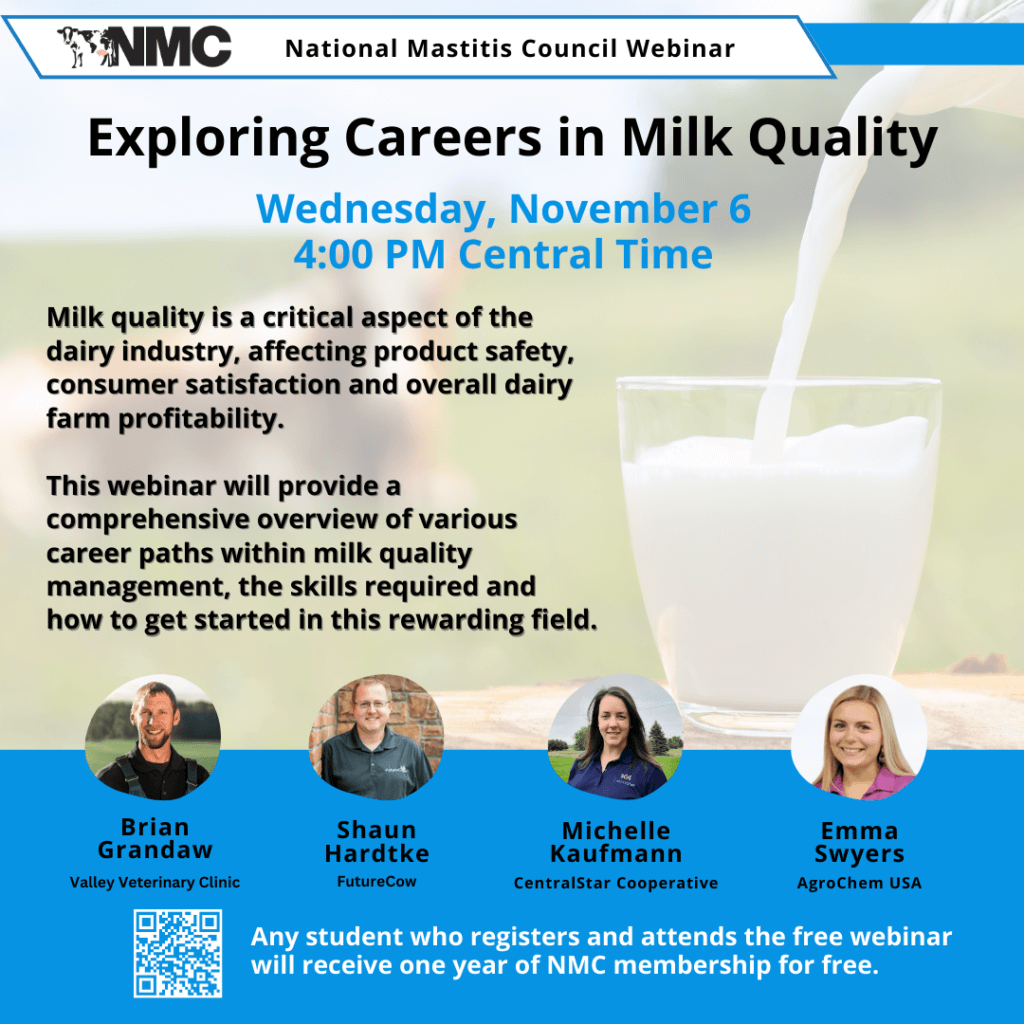
Grandaw majored in dairy science while attending the University of Wisconsin-River Falls and earned his Doctor of Veterinary Medicine degree from University of Wisconsin-Madison in 2007. As a veterinarian and partner at Valley Veterinary Clinic in Seymour, Wis., he is part of a 19-veterinarian practice that serves a large portion of Northeast Wisconsin. Grandaw focuses on herd health, production medicine, milk quality and ventilation.
Hardtke grew up on a 100-cow dairy in Northeast Wisconsin and started an internship with Kinnard Farms in 2005 – just before graduating high school. He earned an associate degree in dairy herd management from Lakeshore Technical College and returned to Kinnard Farms as the assistant herd manager and later became the herd manager. The dairy expanded from 1,200 to 8,500 cows and kept milk quality a high priority. With an interest in leaving his herd manager role, Hardtke contacted FutureCow and was hired. With FutureCow, he works with dairy producers across the United States and internationally – focusing on milk quality and farm management topics.
Kaufmann grew up in Northeast Michigan, spending much of her childhood on her grandparents’ dairy farm. She is a graduate of Michigan State University’s College of Agriculture and Natural Resources. Her responsibilities at CentralStar Cooperative include educating team members about diagnostic testing, working with veterinarians to develop testing strategies, and helping producers understand results and apply management changes to improve overall herd health. With a background of 15 years in the veterinary industry, she understands how to apply diagnostic testing results to real-world problems and develop practical solutions. Kaufmann’s special interest in milk quality is driven by the desire to help provide the world with safe, healthy, nutritious food.
Swyers grew up on a 1,000-cow dairy farm in Western New York. Knowing that she wanted to pursue a dairy industry career, she studied animal science at Cornell University. During that time, she completed several internships that spurred her passion for milk quality. In her current role, Swyers focuses on troubleshooting milk quality issues, such as elevated somatic cell counts and elevated bacteria counts.
NMC Seeks Award of Excellence Nominations
The National Mastitis Council (NMC) opened nominations for its Award of Excellence for Contribution to Mastitis Prevention and Control. This award honors an NMC member who has provided sustained contributions to mastitis prevention and control through research, extension and/or education, clinical practice or service to dairy producers. The award will not be given posthumously.
 The award carries a travel stipend to attend the National Mastitis Council 64th Annual Meeting, Jan. 27-30, in Charlotte, N.C., where the award will be presented.
To nominate an individual, complete the nomination form, which can be found at: https://www.nmconline.org/award-of-excellence. In addition to the completed form, submit at least two letters of support. These letters should describe how the nominee has met award criteria, including time in the dairy industry, positions held, major contributions to mastitis prevention and milk quality, research, publications, leadership roles, participation in NMC activities and industry involvement. Also, include the nominee’s CV (curriculum vitae) and/or resume. Nominations close Nov. 7.
Previous Award of Excellence recipients include Ken Leslie, University of Guelph; K. Larry Smith, Ohio State University; the late Tom Herremans, Michigan Milk Producers Association; Larry Fox, Washington State University; Anne Saeman, National Mastitis Council; Robert Harmon, University of Kentucky; Joseph Hogan, Ohio State University; Andrew Johnson, Grande Cheese Company; J. Eric Hillerton, Drumlanrig, Massey University and Journal of Dairy Research; Gary Neubauer, Zoetis; David Reid, Rocky Ridge Dairy Consulting, LLC; Norm Schuring, GEA; and John Middleton, University of Missouri.
Understanding Teat Dip Use During Winter
By Mireille Chahine and Mario E. de Haro Martí, University of Idaho
Teat dipping at the end of milking has proven to be an effective management practice to reduce the rate of new intramammary infections. In fact, many researchers regard teat dipping as the single most effective practice for preventing new infections in dairy cows. Intramammary infection requires that mastitis-causing organisms penetrate the teat canal and many factors influence the probability of teat canal penetration. One of these factors is the number and type of bacteria found on teat skin. Numerous research trials have proven that teat dipping will reduce both bacterial populations on teat skin and the rate of intramammary infections.
Dairy farm winter management involves implementing practices to ensure dairy cow well-being, including preventing frostbite. The best way to protect cows from harsh winter conditions is through adequate facilities. That includes adequate housing and ample, clean, dry bedding. Ensure dairy animals have access to well-constructed and insulated shelters to shield them from extreme winter weather, including cold temperatures, wind and precipitation. Drop curtains in freestalls during cold weather to minimize wind speed and alleviate wind chill, while still maintaining adequate ventilation. Provide windbreaks to cows housed in open lots.
Dairy producers struggle with the use of teat dips in winter. They question whether they should continue dipping during cold weather and at what temperature they should modify their procedures to reduce the occurrence of frostbite on teats. These are valid concerns because cracked and irritated teats create a conducive environment for mastitis-causing bacteria. Preventive steps must be taken whenever there is a chance for the wind chill to be less than 25 F (minus 3.9 C). The primary concern is to reduce frostbite injury to teat ends. Let’s examine some of the best teat dipping management practices to follow in cold weather.
First, do not store teat dips where they will freeze. Follow manufacturer recommendations for storage. Choose a teat dip that is effective against common mastitis-causing bacteria. Look for teat dips formulated for winter conditions, protecting against harsh weather. There are powder formulations for extremely low temperatures. Avoid using barrier dips in winter as they tend to be a slow-drying option due to film-forming characteristics. A slower-drying dip can leave wet teats exposed while cows are returning to their holding areas. Prevent frostbite by allowing cows to remain in the parlor or return lanes until the teat dip has dried. An absorbent towel could also be used to blot the teat dip after allowing 30 seconds of contact time and before returning the cow to the cold housing area.
It is not recommended to quit post-dipping because teats are still wet post-milking, which could still lead to severe cases of chapped teats and teat ends. Establish a “winter teat dip” standard operating procedure that should be implemented whenever a specific wind chill temperature is reached. Train farm personnel to implement the protocol and recognize signs of frostbite. Ensure that staff members are vigilant and proactive in addressing potential issues.
Regularly, check the weather forecast for cold, windy conditions and invest in a small weather station that provides information on temperature, humidity, wind and wind chill. These tools will help you and your personnel make faster and more effective decisions.
Evaluate cows’ teat ends by assessing at least 20% of your herds’ teat end condition post-milking. Rough teat ends, known as hyperkeratosis, present increased difficulty in cleaning and tend to harbor more bacteria. Cows housed in open lots should be evaluated separately from cows housed in freestalls and cross-ventilated barns.
Remember: a sound mastitis prevention program should include pre- and post-milking sanitation, regardless of the weather. Udders and teats should be clean and dry before machine attachment. Maintain the milking system. Plus, milking technicians should follow approved milking procedures. By implementing these best management practices, dairy farmers can help ensure the health and productivity of their animals during the winter season.
Genomic Insights Yield Improved Milk Production, Milk Components, Milk Quality
Genomic science, for the dairy industry, “hit the ground running” in 2008 and there’s been little reason to “look in the rearview mirror” – due to significant genetic advancements. Described as the comparison of an individual animal’s DNA to the phenotypic performance of the entire population, genomics helped the dairy industry make significant strides in reducing the generation interval (time needed to identify superior individuals) with minimal loss in accuracy. By reducing the generation interval, dairy cattle genetic improvements supported increased milk, butterfat and protein production, along with enhanced cow health and longevity.
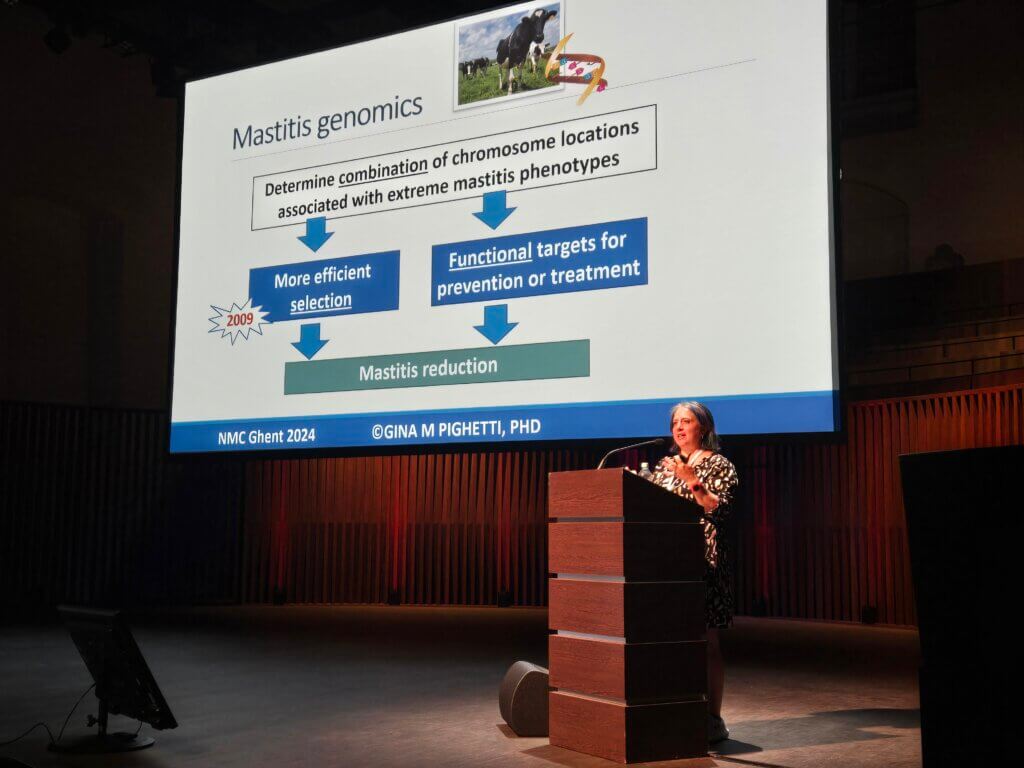
Gina Pighetti
Part of that cow health improvement revolves around mastitis genomics. During the 2024 National Mastitis Council Regional Meeting, held in Ghent, Belgium, Gina Pighetti, Pighetti Farms &Consulting, Howard, Pa., USA, shared that mastitis genomics has traveled two complementary paths – one focused on identifying superior animals and the other focused on identifying genes and pathways associated with different levels of susceptibility.
In many genomic programs, mastitis resistance primarily reflects two measures of inflammation – clinical mastitis and somatic cell count (SCC), Pighetti explained. Over the last 10 years, these phenotypes have been subdivided to create udder health or mastitis resistance indices that reflect the greater risk of mastitis with age.
Pighetti discussed two examples. The Canadian mastitis resistance index uses three phenotypes – clinical mastitis in first lactation, later lactations, and somatic cell score (SCS) across first, second, and third lactations. The Nordic udder health index includes clinical mastitis in early first lactation, after 50 days in first lactation, through 150 days in second and third lactations, SCC 5 – 305 days in milk for first, second, and third lactations, as well as fore udder attachment and udder depth in first lactation. For indices, the greater the value, the greater the resistance. As noted with milk, butterfat and protein production improvements, genomic selection has increased the rate of genetic change relative to SCS by reducing generation interval and increasing the accuracy of selecting sires whose daughters have lower SCS.
How can the dairy industry make even more genetic progress regarding mastitis resistance? “Create novel phenotypes that capture the interplay between the host and the invading organism,” answered Pighetti. She said that phenotypes that directly measure major mastitis pathogens, such as Staphylococcus aureus, Streptococcus uberis, and Escherichia coli, will be helpful. Why? Because the host responds differently to these organisms. “We need to further develop in-line detection technologies and collect more intensive phenotypes in genomic training populations. These strategies will help create novel phenotypes. Also, including bacterial and/or immune phenotypes in a genetic index could offset a potential risk.” She noted that current genomic approaches may inadvertently select for less responsive animals that display less clinical mastitis and lower SCC, despite an infection. “A balanced index with intramammary infection and/or immune-based phenotypes could offset this risk.”
During her NMC Regional Meeting presentation, Pighetti also discussed genome wide association (GWAS) studies, which seek to identify changes in genetic background most associated with the highs and lows observed in a specific phenotype. These highs and lows indicate potential genes and pathways that are the basis for phenotype differences.
Pighetti talked about findings from two recent studies that prioritized genes and pathways in the context of immunity, mastitis pathogenesis, and research needed to develop these targets. In the first study, a metanalysis of 40 studies revealed 427 genes highly associated with SCC or clinical mastitis. The chemokine family, which directs specific immune cells to needed locations, were 10 of the top 25 genes. Several are binding partners. They include CCL2 (Macrophage chemotactic protein-1) with its receptor CCR2 and CCL3 (macrophage inflammatory protein 1-alpha) with its receptor CCR5.
“Future research should investigate the mammary cell types that express these receptors, how their response to ligand shapes immunity, and the clearing of infection,” Pighetti stated. “Research results would provide us with greater insight to developing new therapies.”
The second study discovered aspects of adaptive immunity that were inadvertently selected along with milk yield when the underlying genomic structure of Holstein lines selected for milk yield or not since 1964 were investigated. “The BOLA-DRB2 gene, or MHC class II, had considerably less heterozygosity in the milk-line selected group versus the non-selected group,” Pighetti explained. “This change suggests a potential loss of immunity, as MHC class II takes antigens processed by macrophages and dendritic cells and presents them to T cells. Genes for the T cell receptor alpha variable and constant chains, as well as immunoglobulin lambda, kappa, and heavy chains, also indicated a shift with milk yield selection and could influence the range or type of organisms recognized by the adaptive immune system.” Nine genes identified in this study were also identified in the first study.
Pighetti foresees genomics playing a key role in “battling” mastitis. “Developing new phenotypes and including them in a mastitis resistance index will provide a more balanced approach and will offset one potential risk in our current strategy,” she concluded. GWAS-based studies have provided a list of prioritized genes associated with the inflammatory response. “Greater understanding of how these specific genes and pathways influence mastitis resistance will allow targeted development of alternative preventive and therapeutic strategies.”
References available upon request.
Are Teat Sealants Worth the Investment? And is There a Difference Between Market-Leaders?
By Tiago Tomazi, Dairy Technical Services, Merck Animal Health
When a single case of mastitis can cost up to $444 per cow1, effective prevention tools are paramount for running a profitable dairy. But which dry-off approach is most efficient?
A randomized equivalence study was conducted to evaluate the efficacy of two commercially available teat sealants in dairy cows2. See whether teat sealants are worth the investment as a preventive solution and if there’s a difference between SHUTOUT® and ORBESEAL®.
The importance
Dairy cows are most susceptible to new intramammary infections (IMIs) during the dry period3,4. IMIs acquired during the dry period can have a significant impact on milk production, milk quality, herd removal and reproductive performance post-calving.
A cow’s natural defense mechanism against mastitis is the formation of a keratin plug within the teat canal which seals teat ends from bacterial penetration during the dry period. Plug formation can be delayed, however, or fail to form altogether.5,6 The use of an internal teat sealant, such as SHUTOUT, has been shown to reduce the risk of developing an IMI by more than 70%.7
The study
Over 800 lactating cows at six commercial dairies in Minnesota and Iowa received 500 mg of ORBENIN-DC™ (cloxacillin benzathine intramammary infusion) in each quarter at dry-off, followed by administration of either SHUTOUT or ORBESEAL teat sealants.
At dry-off and again during the first 14 days in milk (DIM), researchers collected milk samples from each quarter to diagnose subclinical mastitis, using milk cultures to identify pathogens present. Milk samples were also collected from cows exhibiting signs of clinical mastitis for the first 120 DIM. Researchers used Dairy Herd Improvement Association (DHIA) records to evaluate somatic cell count (SCC) and milk production after calving.
The results
The study results (figure 1) show that SHUTOUT is just as effective as market leader ORBESEAL in preventing mastitis during the dry period. There were no statistical differences in the effectiveness of SHUTOUT and ORBESEAL when evaluating:
- Risk of new intramammary infections (IMIs) in the dry period
- Mastitis cure rate
- Risk of culling or death
- Milk yield and SCC post-calving
Figure 1. Outcomes from the comparison of two different internal teat sealants administered at dry-off
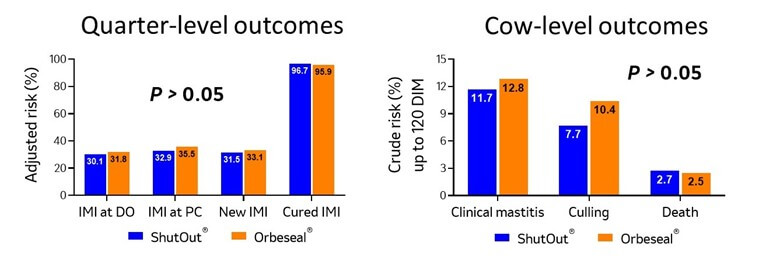
Further, ORBENIN-DC cured more than 95% of the quarters with IMIs at dry off, regardless of the internal teat sealant used.
The impact
This study reinforces the importance of a comprehensive dry cow management program that includes antibiotic therapy at dry off to cure existing subclinical mastitis cases, along with an effective teat sealant to prevent new IMIs during the dry period.
With the ever-growing economic challenges dairy producers face, comparing the efficacy of multiple products in preventing new IMIs can provide peace of mind for producers while providing a wider array of products and improving competitive pricing within the market.
References
1. Rollin, E., K.C. Dhuyvetter, and M.W. Overton. “The Cost of Clinical Mastitis in The First 30 Days of Lactation: An Economic Modeling Tool.” Preventive Veterinary Medicine, vol. 122, no. 3, 2015, pp. 257-264. Elsevier BV, doi:10.1016/j.prevetmed.2015.11.006.
2. Buckley, M.P., J. Bayne, T. Tomazi, B.E. Miller, S.M. Godden, G.S. Silva, and P.J. Gorden. 2023. A randomized equivalence study evaluating the efficacy of two commercially available teat sealants in dairy cows. The Bovine Practitioner 27(2):36-50.
3. Bradley, A.J., and M.J. Green. The importance of the nonlactating period in the epidemiology of intramammary infection and strategies for prevention. Vet. Clin. North Am. Food Anim. Pract. 2004;20(3):547-68.
4. Smith, K.L., D.A. Todhunter, and P.S. Schoenberger. Environmental pathogens and intramammary infection during the dry period. J. Dairy Sci. 1985;68(2):402-417.
5. Dingwell, R.T., L.L. Timms, J.M. Sargeant, D.F. Kelton, Y.H. Schukken, and K.E. Leslie. The association of teat canal closure and other risk factors for new dry period intramammary infections. Proceedings, National Mastitis Council 42nd Annu. Mtg. 2003;298-299.
6. Williamson, J.H., M.W. Woolford, and A.M. Day. The prophylactic effect of a dry-cow antibiotic against Streptococcus uberis. N. Z. Vet. J. 1995;228.
7. Rabiee, A.R, and I.J. Lean. The effect of internal teat sealant products on intramammary infection, clinical mastitis, and somatic cell counts in lactating dairy cows. J. Dairy Sci. 2013;96(11):6915-6931.
*Merck Animal Health provided this article. The National Mastitis Council does not support one product or business over another.
The Passing of William Nelson Philpot

William Nelson Philpot
The 1974 National Mastitis Council president, William Nelson Philpot, age 89, passed away on Sept. 30, in Homer, La. He was born on June 9, 1935, to Odis and Blake Philpot at Cherry Hill, Ark. He graduated from high school in Mena, Ark., in 1953 and attended Southern Arkansas State University before transferring to Oklahoma State University where he completed bachelor’s and master’s degrees, and PhD.
Philpot married Doris Ann Kinkade on May 7, 1954, and together they raised one son, Michael, and two daughters, Marcia and Valerie. They made their homes in Stillwater, Okla. and Homer, La., respectively.
In 1963, Philpot helped establish the internationally recognized Louisianna State University (LSU) Mastitis Research Laboratory and served as director until 1980 when he became resident director of the LSU Hill Farm Research Station.
Philpot retired from LSU in 1995 and continued his interests, lecturing and consulting internationally, as well as engaging in international agricultural mission activities. For many years, he enjoyed speaking on milk quality, world hunger, agricultural development and the role of biotechnology in feeding the world.
NMC Webinar Addresses ‘Leveraging Milk Monitoring and Parlor Performance Information to Boost Employee Compliance’
Join the National Mastitis Council (NMC) for its Dec. 4 webinar – “Leveraging Milk Monitoring and Parlor Performance Information to Boost Employee Compliance” – presented by Curtis Horsens, Merck Animal Health. The free, one-hour webinar starts at 2 p.m. Central time (USA/Canada).
To register for this webinar, go to: https://bit.ly/NMCDec4Web. If you are an NMC member and cannot attend the live program, you may access the webinar recording after Dec. 18 at: nmconline.org.
With trustworthy identification and milk yield measurement, dairy farm managers can use milk harvest information to monitor the performance of their milking technicians. This webinar, sponsored by Merck Animal Health, will showcase opportunities to use information gathered during the milk harvesting process to understand the workflow of the farm staff, cow milkability and efficiency of the milking parlor. Many people play a role in the milking process and this webinar will inspire attendees on how to use objective insights to coach employees and improve the milking experience of each cow at each shift.
Horsens is the North America senior training & development specialist for Merck Animal Health’s SenseHub portfolio. He is responsible for developing the knowledge and skills of the Merck Animal Health Cattle team and their SenseHub dealers and distributors. He has an extensive background in the dairy industry, with expertise in milk quality, on-farm milk culturing, reproduction and calf care. Horsens holds a bachelor’s degree in dairy science from the University of Wisconsin-Madison and is a Young Dairy Leaders Institute graduate. Before joining Merck Animal Health five years ago, Horsens spent a decade managing high-producing herds, including a 530-cow dairy with an impressive 42,000-pound rolling herd average (milk), 69,000 somatic cell count and a 30 percent pregnancy rate.
NMC applied for one Registry of Approved Continuing Education (RACE) credit, which helps veterinarians fulfill continuing education requirements. For further information about NMC’s RACE offerings, contact JoDee Sattler at: jdsattler@nmconline.org.